Meal Substitute Powder: What It Has to Cover and How to Use One
A meal substitute powder is meant to stand in for an entire meal, which means it has to supply the calories, protein, fiber, fat and micronutrients that meal would have provided, not just a scoop of protein. Most of what is sold under this name is closer to a protein snack, so the label, not the marketing, is what tells you whether it actually substitutes for food.
Shop the Essentials range
View all products →
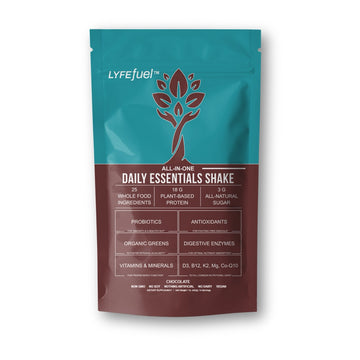
Essentials Shake
Chocolate · 24 servings
★★★★★★★★★★ 4.64 (1576)

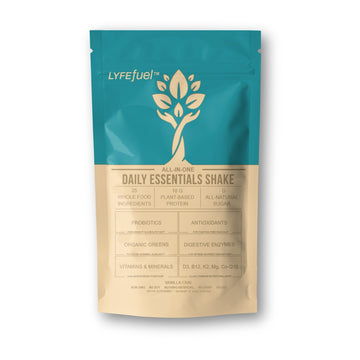
Essentials Shake
Vanilla Chai · 24 servings
★★★★★★★★★★ 4.64 (1576)

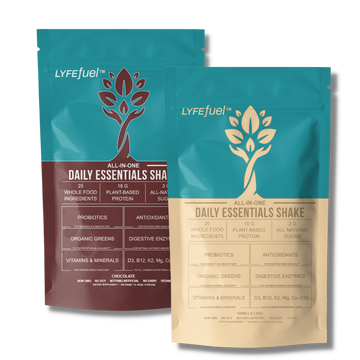
Essentials Bundle
2x Vanilla · free shaker
★★★★★★★★★★ 4.64 (1576)
Key Takeaways
- "Meal substitute" and "meal replacement" mean the same thing in practice. A protein powder is a different product with a narrower job.
- To genuinely substitute for a meal, a powder needs roughly 300 to 500 calories, 15g or more protein, some fiber and fat, and a full micronutrient panel, all built into the base rather than added later.
- Most powders on the shelf fall short on fiber and fat, which is why they need help from real food to function as a full meal.
- Substituting works well for the one meal you consistently skip or eat poorly. It works poorly as a way to replace most of your daily food.
- Cost and convenience favor the powder. Nutrient density and satiety favor whole food. Neither wins outright, which is why the tradeoff has to be made deliberately.
Meal substitute, meal replacement, protein powder: the terms are not interchangeable
"Meal substitute" and "meal replacement" describe the same category and are used interchangeably by both shoppers and the industry. Both terms mean a product intended to take the place of an entire meal, breakfast, lunch or dinner, on its own.
"Protein powder" is a narrower product with a narrower job: it adds protein to whatever you are already eating or drinking. Whey isolate, pea protein isolate, casein and most gym-shelf tubs fall here. Nothing stops a company from marketing a 90 calorie protein powder as a meal substitute, and plenty do, but the label tells the real story.
The confusion matters because the two products solve different problems. If you already eat three meals and want more protein at one of them, you want a protein powder. If you are trying to replace an entire meal you would otherwise skip, eat poorly, or not have time for, you need something that covers considerably more ground than protein.
There is no regulatory line that forces a product to be nutritionally complete before it can call itself a meal substitute. That is a labeling choice, not a nutrition standard, which is exactly why checking the panel yourself is the only reliable filter.
What a powder has to cover to actually substitute for a meal
A meal you would normally eat brings calories, protein, fat, fiber and a spread of vitamins and minerals, all at once. A powder claiming to substitute for that meal has to bring the same things, in roughly the same proportions, or you end up hungry, under-fed, or both within an hour.
Calories. A typical meal runs 300 to 600 calories depending on body size and activity. A powder in the 90 to 150 calorie range is a base you build on with milk, fruit or nut butter, not a substitute on its own. Anything marketed as a standalone meal substitute should land closer to 300 to 500 calories once mixed as directed, or it needs deliberate additions to get there.
Protein. 15g to 30g per serving is the useful range for a meal. Below that, the meal will not carry you the way whole food protein would. Above 30g in a single serving, you are likely paying for more protein than one sitting uses.
Protein completeness. Single plant sources have amino acid gaps. Pea protein runs low in methionine, rice protein runs low in lysine, and pairing the two closes both gaps. Soy and hemp are more complete on their own. Whey is complete and absorbs quickly but is dairy, which rules it out for a meaningful share of shoppers.
Fiber. This is the most commonly missed piece. A real meal, especially one with vegetables, grains or legumes, brings meaningful fiber. A powder with 1g to 2g digests fast and will not hold you the way the meal it is replacing would have. If the fiber number is low, plan to add it separately.
Fat. Fat slows digestion, supports satiety, and is required to absorb the fat-soluble vitamins A, D, E and K. A powder that is near zero fat but lists those vitamins on the panel is only delivering them in a usable form if you add fat yourself, from milk, nut butter or seeds.
Micronutrients, named and quantified. A genuine meal substitute lists each vitamin and mineral by name and amount, matched reasonably against daily needs. A vague "superfood blend, 2,000mg" tells you nothing about how much of anything is actually in the scoop.
If a powder is missing two or more of these, it can still be a fine product, but it is not functioning as a meal substitute without help.
Sweeteners and additives are worth a separate look because they change how the meal actually digests. Stevia, monk fruit, sucralose and sugar alcohols such as erythritol or maltitol behave differently in the body. Sugar alcohols are the usual culprit when a shake causes bloating or gas, especially in doses large enough to sweeten a whole meal-sized serving. Total sugar and added sugar are also worth reading separately, since a "low sugar" claim can still mean most of that sugar was added rather than coming from the ingredients themselves.
How to build a powder into a real meal
Even a well-built powder is a base rather than a finished meal, and three additions do most of the work of closing that gap.
- Add fat. A tablespoon of nut butter, a quarter of an avocado, or a spoon of ground flax or chia. This is the single most effective fix for feeling hungry again soon after drinking a shake, and it makes the fat-soluble vitamins on the label more usable.
- Add fiber or a piece of whole fruit. A banana, a handful of berries, or a spoon of oats slows digestion and brings the fiber most powders are short on.
- Use a liquid with substance. Water works nutritionally but adds nothing. Unsweetened soy or pea milk adds protein and body, and turns a thin drink into something closer to a meal.
Blend rather than shake anything that contains real ground ingredients, greens, seeds or berry powders. A shaker bottle leaves that sediment at the bottom of the glass instead of in the meal.
None of this is a workaround for a bad product. It is simply how a concentrated powder becomes a plate-sized amount of food, which is what "meal substitute" is claiming to be in the first place.
When substituting a meal makes sense, and when it does not
Substituting works well for the meal you consistently skip, eat at your desk, or replace with something worse. For most people that is breakfast or a rushed weekday lunch. Trading a pastry or nothing at all for a nutritionally dense powder built out with fruit and fat is a genuine upgrade, not a compromise.
Substituting works poorly as a strategy for replacing most of your food across the day. Chewing, food variety, and the fiber and phytonutrient diversity of whole food all do things a powder cannot replicate, no matter how complete the panel looks. One shake a day is easy to sustain. Two is workable for some people. Beyond that, most people find the lack of variety wears on them, separate from whether the nutrition numbers add up.
A meal substitute is also not inherently a weight loss product. It creates a calorie deficit only if it has fewer calories than the meal it replaced. A 450 calorie substitute drunk on top of three normal meals adds 450 calories, it does not subtract anything. That distinction gets blurred by marketing more often than it should.
If you are pregnant, managing a medical condition, taking prescription medication or on a GLP-1 medication, talk to your doctor or a dietitian before making a meal substitute a daily habit. Some micronutrient amounts can matter alongside other supplements or medications you are taking.
There is also a social and practical dimension worth naming. A powder works well alone at a desk or on the road, but it does not replace a shared meal the way food does, and it can feel isolating if it becomes the only version of "eating" you do in a day. People who substitute successfully long term tend to treat it as one tool among several rather than a wholesale replacement for cooking or eating with other people.
Cost, convenience and nutrition, the real tradeoff
A meal substitute powder wins on convenience without argument. It takes under a minute to prepare, travels in a bag, and needs no cooking or cleanup beyond a shaker bottle. For a meal that would otherwise be skipped entirely, that convenience has real nutritional value on its own.
Whole food generally wins on nutrient density and satiety per calorie. A plate built from vegetables, a protein source and a starch brings fiber diversity, water content and chewing time that no powder replicates, and tends to keep people full longer per calorie consumed.
Cost comparisons across the category are noisy because serving sizes, protein content and what counts as "a meal" all vary widely between products, and per-serving math without those details attached is not a reliable way to compare. The more useful question is not which option is cheaper in isolation, but which one you will actually use consistently for the meal you are trying to fix. A nutritionally strong powder you skip because it is inconvenient does nothing. A convenient one that is nutritionally thin leaves you hungry an hour later and reaching for something else anyway. Matching the product to the specific meal problem you have, rather than optimizing for cost or convenience alone, is what makes the substitution actually work.
There is also a hidden convenience cost worth naming: a powder that has to be built out with fruit, nut butter and a blender every time is not actually a one minute meal anymore. If your real constraint is time rather than nutrition, a simpler formula you will reliably prepare beats a nutritionally denser one that sits in the cupboard because it takes ten minutes and three extra ingredients to assemble. The right choice depends on which constraint, time, money or nutrient gaps, is actually driving the decision to substitute a meal in the first place.
How LyfeFuel Essentials measures up against these criteria
Measured against the checks above, honestly, including where it falls short:
- Calories: 110 per 33g scoop. That is a base, not a full meal by itself. It is designed to be built out with milk, fruit and a fat source to land in the 300 to 500 calorie range described above.
- Protein: 18g from Canadian yellow pea and organic rice protein, the complementary pairing that closes each source's amino acid gap.
- Fiber: 1g. Low, and worth saying plainly rather than hiding. Add fruit or oats, or pair it with our bars, which carry 12g to 14g fiber per bar.
- Fat: 2g. Low, so add your own fat source if you want the fat-soluble vitamins on the panel to be usable.
- Micronutrients: 27 vitamins and minerals listed by name and amount, not folded into a vague blend, alongside whole food blends such as spirulina, flax and pomegranate, each named with its milligram amount.
- Sweetener: stevia leaf extract, 3g sugar per scoop. No sugar alcohols, which avoids the bloating some erythritol-sweetened shakes cause.
- Where it is still a standard premix: the vitamin and mineral portion uses a conventional supplement-grade blend, as most products in this category do. The berry, greens, seed and botanical ingredients are real, named, whole food. We are not claiming the micronutrient premix is anything other than standard.
Frequently asked questions
Is a meal substitute powder the same as a meal replacement shake?
Yes. The terms are used interchangeably for a product meant to stand in for a full meal. Neither term is regulated, so the actual nutrition still has to be checked on the label rather than assumed from the name.
Is a meal substitute powder the same as a protein powder?
No. A protein powder's only job is to add protein to what you already eat. A meal substitute has to cover the calories, fat, fiber and micronutrients of a full meal as well, not just protein.
How many calories should a meal substitute powder have?
Around 300 to 500 calories once it is built out, which most powders only reach after you add milk, fruit or a fat source. Lower calorie powders in the 90 to 150 range work as a base you build out with milk, fruit and a fat source.
Can a meal substitute powder help with weight loss?
Only if it has fewer calories than the meal it replaces. It is not a weight loss mechanism on its own. Drunk on top of your normal meals, it adds calories rather than removing them.
How many meals a day can I realistically substitute?
One reliably, two for some people. Beyond that, most people miss the variety and chewing that whole food provides, regardless of how complete the powder's nutrition panel is.
Why does a meal substitute shake leave me hungry soon after?
Usually low fat and low fiber. Adding a fat source such as nut butter or seeds, plus a piece of whole fruit, closes most of that gap.
Is a meal substitute powder cheaper than eating a normal meal?
It depends heavily on serving size, protein content and what you compare it against, so there is no reliable single answer. The better question is whether you will use it consistently for the specific meal it is meant to replace.
Related guides
- Best meal substitute shakes
- Dairy free meal replacement shakes
- Healthy meal replacement shakes
- High protein meal replacement
- Lactose free meal replacement shakes
- Low calorie meal replacement shakes
- Low sugar meal replacement
- Meal replacement protein powder
- Meal replacement shakes for breakfast
- Meal replacement shakes for seniors
- Meal replacement shakes for women
- Nutritional meal replacement shakes
- Plant based meal replacement shakes
- Protein shakes without artificial sweeteners
- Vegan meal replacement