Lactose Free Meal Replacement Shakes: How to Tell What Is Actually Safe
A truly lactose free meal replacement shake has to use a protein source with no dairy in it at all, because even "low-lactose" whey isolate carries trace amounts that add up over a whole meal-sized serving. The label test is simple: if the protein source is any form of whey, casein or milk, it is not lactose free no matter how the front of the package words it.
Shop the Essentials range
View all products →
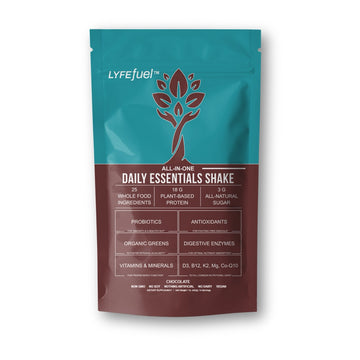
Essentials Shake
Chocolate · 24 servings
★★★★★★★★★★ 4.63 (1574)

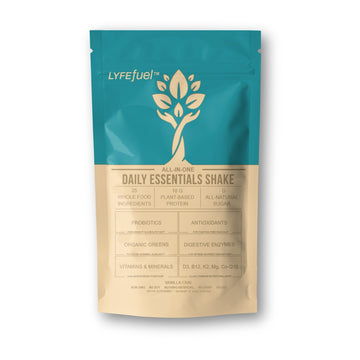
Essentials Shake
Vanilla Chai · 24 servings
★★★★★★★★★★ 4.63 (1574)

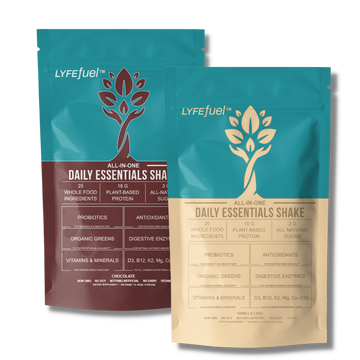
Essentials Bundle
2x Vanilla · free shaker
★★★★★★★★★★ 4.63 (1574)
Key Takeaways
- Lactose intolerance, milk allergy and whey protein sensitivity are three different problems with three different triggers, and the fixes are not interchangeable.
- Whey isolate is lower in lactose than whey concentrate, but "lower" is not "zero." Trace lactose in an isolate can still trigger symptoms at meal-replacement serving sizes.
- Symptoms from lactose typically show up 30 minutes to 2 hours after drinking, which is the easiest way to tell it apart from a same-second whey protein reaction.
- Dairy hides on ingredient lists under names like whey, casein, caseinate, milk solids and lactoserum, not just "milk."
- A plant protein base, such as pea and rice, is the simplest route to lactose free because there is no dairy anywhere in the formula to check for.
Lactose intolerance, milk allergy and whey sensitivity are not the same thing
These three get lumped together because they all involve dairy, but they are different mechanisms and mixing them up leads people to the wrong product.
Lactose intolerance is a digestive issue. The small intestine does not produce enough lactase, the enzyme that breaks down lactose (milk sugar), so undigested lactose moves into the colon where bacteria ferment it. That fermentation is what causes the bloating, gas and loose stool. It is dose-dependent, meaning a small amount of lactose might be fine while a full serving in a meal-sized shake is not.
Milk allergy is an immune response, not a digestive one. The immune system reacts to milk proteins, primarily casein and whey, and even a trace amount can trigger a reaction. This is a different threshold than lactose intolerance: someone with a milk allergy needs a shake with zero milk protein, not just low lactose, and that includes whey isolate.
Whey protein sensitivity is its own category and is unrelated to lactose. Some people react to whey protein itself, whether from digestive discomfort or a milder immune reaction, even in isolate form where lactose has been stripped out. If cutting lactose did not fix your symptoms with a whey-based shake, the protein itself, not the sugar, may be the trigger.
Knowing which of the three applies to you determines whether you need "low-lactose," "milk-free" or "whey-free," and those are not the same shopping list.
Why whey isolate is low-lactose, not lactose-free
Whey protein starts as a liquid byproduct of cheesemaking that is high in lactose. Manufacturers filter it down: whey concentrate keeps more lactose (often 4-8% by weight), whey isolate is filtered further and typically lands under 1% lactose, and whey hydrolysate is filtered further still.
That filtering is real and meaningfully reduces lactose. It does not remove it. A "whey isolate" label is a filtration claim, not a lactose-free claim, and the two get treated as interchangeable in marketing more often than they should be.
For someone with mild lactose intolerance, an isolate-based shake may be tolerable in a small serving. For a meal replacement, where the serving is bigger and often taken daily, that small trace amount is exactly the kind of thing that adds up to symptoms. If you are lactose intolerant and want to stop guessing, the only formulas that remove the variable entirely are the ones with no dairy protein source in them at all.
Symptoms and timing, and how to tell the causes apart
Lactose intolerance symptoms are gastrointestinal and delayed: bloating, gas, cramping and loose stool typically appearing 30 minutes to 2 hours after the shake. The delay happens because the lactose has to travel to the colon before fermentation starts.
Milk allergy symptoms can appear faster, sometimes within minutes, and can include hives, swelling, or in more serious cases, breathing difficulty. Any of those symptoms warrant seeing a doctor and are a different situation than a digestive intolerance.
Whey sensitivity that is not allergy-driven tends to look like generic digestive upset, similar to lactose intolerance in symptom type, which is what makes the two easy to confuse. The way to separate them: switch to a whey isolate (very low lactose) for a week. If symptoms persist, lactose was likely not the cause and the whey protein itself is worth looking at. If symptoms improve but do not fully resolve, trace lactose in the isolate may still be contributing.
If you have a diagnosed milk allergy, do not use this self-test. Any whey product is off the table regardless of filtration level, and that is a conversation for a doctor or allergist, not a label read.
Where lactose hides on an ingredient list
Lactose and milk protein show up under names that do not always say "milk" or "dairy" plainly:
- Whey, whey protein concentrate, whey protein isolate
- Casein, caseinate, sodium caseinate, calcium caseinate
- Milk solids, milk powder, nonfat dry milk
- Lactoserum (the European name for whey)
- Butter, butterfat, ghee (dairy fat sources that can carry trace milk protein)
"Non-dairy" on a label is a legal labeling term with its own loopholes and is not the same guarantee as "dairy-free" or "vegan," so read the ingredient list itself rather than trusting the front-of-package language. A protein blend list that has no dairy-derived name anywhere in it is the only version of "lactose free" you do not have to double check every time you buy a new tub.
Plant-based protein is the simplest route to lactose free
The most reliable way to avoid this problem entirely is to choose a shake built on a plant protein base with no dairy anywhere in the ingredient list, rather than trying to find the lowest-lactose version of a dairy protein.
Pea and rice are the most common complementary pairing in plant meal replacements: pea protein is a strong source of most essential amino acids but runs low in methionine, rice protein is low in lysine, and combining the two covers both gaps so the finished protein blend is complete. Soy and hemp are complete proteins on their own but come with different considerations, soy for allergy overlap and hemp for a lower protein-per-serving yield.
Because there is no dairy input in a plant-based formula, there is no lactose to filter out and no trace amount to worry about at any serving size, which removes the guesswork that comes with whey isolate.
Digestive support ingredients: what enzymes and probiotics actually do in the formula
Some plant-based shakes include a digestive enzyme blend or a probiotic blend as part of the ingredient panel, separate from the protein source. Digestive enzymes are proteins that help break down macronutrients like protein, fat and carbohydrate during digestion. Probiotics are live microbial strains, measured in CFU (colony-forming units) on the label.
These ingredients are included as part of a whole-formula approach to digestibility. Neither is a treatment for lactose intolerance itself, since that specific problem is about the enzyme lactase and dairy sugar, not about protein or fat digestion generally. If a shake's protein source is already dairy-free, the enzyme and probiotic blends are additive support for digestion broadly, not a fix layered on top of a dairy protein to make it tolerable.
If you have a diagnosed digestive condition, allergy or are on medication, check any new supplement, including probiotic and enzyme blends, with your doctor before adding it daily.
LyfeFuel Essentials against this criteria
Measured against what actually matters for lactose free, including where the fine print applies:
- Protein source: Canadian yellow pea protein and organic rice protein, the complementary pairing described above. No whey, casein or any dairy-derived ingredient in the protein blend.
- Allergen panel: the label states no dairy and no soy. It does list tree nuts (coconut) and wheat (wheatgrass) as allergens present, which matters if either of those is a separate concern for you.
- Digestive additions: a Probiotic Blend at 960 million CFU across 5 strains and a Digestive Enzyme Blend at 50mg are both included on the panel, listed by name and amount. These are general digestive-support ingredients, not a treatment claim, and they do not change the fact that lactose is not present to begin with.
- Where it falls short as a full meal: at 110 calories and 2g fat per scoop, this is a base, not a complete meal on its own. It is built to be blended with milk alternative, fruit and a fat source. If dairy milk is your usual mixer, swap it for a plant milk to keep the whole shake lactose free, not just the powder.
- Fiber: 1g per scoop, which is low. If digestive comfort is your goal alongside avoiding lactose, add fruit or a fiber source, or pair with the Essentials Bar, which carries 12g to 14g of fiber and is also grain, dairy and soy free.
Frequently asked questions
Is whey protein isolate lactose free?
No. It is low-lactose, typically under 1% lactose by weight after filtration, but it is not zero. For lactose intolerance that is dose-dependent, that trace amount can still cause symptoms in a full meal-sized serving.
What is the difference between lactose intolerance and a milk allergy?
Lactose intolerance is a digestive issue caused by low lactase enzyme production, and it is dose-dependent. Milk allergy is an immune reaction to milk proteins like casein and whey, and even trace amounts can trigger it. They require different solutions: low-lactose can work for intolerance, but a milk allergy needs zero dairy protein.
Can you be sensitive to whey protein without being lactose intolerant?
Yes. Some people react to the whey protein itself, not the lactose, and continue to have symptoms even with a whey isolate that has very little lactose left. If cutting lactose did not resolve your symptoms, the protein source itself is worth reconsidering.
How long after drinking a shake do lactose symptoms show up?
Typically 30 minutes to 2 hours, because the undigested lactose has to reach the colon before bacterial fermentation causes the bloating and gas. A faster reaction, especially within minutes, points toward an allergy rather than intolerance and should be discussed with a doctor.
Is plant protein automatically lactose free?
Yes, if the formula has no dairy-derived ingredient anywhere on the label, since lactose only comes from milk. Check the full ingredient list rather than just the protein type, since some blends add dairy-based flavoring or fillers separately from the main protein source.
Do digestive enzymes or probiotics in a shake help with lactose intolerance?
They support digestion generally, but they are not a specific treatment for lactose intolerance, which is caused by low lactase enzyme activity for dairy sugar specifically. A dairy-free protein source removes the lactose problem directly, rather than adding ingredients to manage it.
What does "non-dairy" mean on a label if it isn't the same as dairy-free?
"Non-dairy" is a labeling term with looser legal requirements and can still permit trace milk-derived ingredients in some products. "Dairy-free" and a clean ingredient list with no whey, casein or milk solids is the more reliable check.
Related guides
- Best meal substitute shakes
- Dairy free meal replacement shakes
- Healthy meal replacement shakes
- High protein meal replacement
- Low calorie meal replacement shakes
- Low sugar meal replacement
- Meal replacement protein powder
- Meal replacement shakes for breakfast
- Meal replacement shakes for seniors
- Meal replacement shakes for women
- Meal substitute powder
- Nutritional meal replacement shakes
- Plant based meal replacement shakes
- Protein shakes without artificial sweeteners
- Vegan meal replacement