Low Sugar Meal Replacement: What "Low Sugar" Actually Means on the Label
A low sugar meal replacement is one where added sugar, not just total sugar, stays in the single digits per serving, and where the sweetener used does not trade one problem for another. The label tells the real story only if you read total sugar, added sugar and the sweetener line separately, since a product can look low sugar overall and still be built almost entirely on added sweetener.
Shop the Essentials range
View all products →
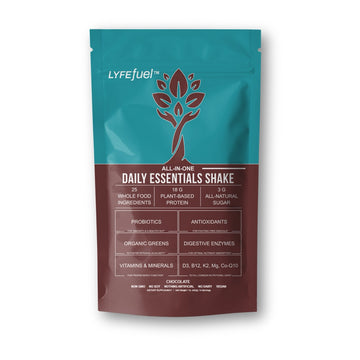
Essentials Shake
Chocolate · 24 servings
★★★★★★★★★★ 4.63 (1566)

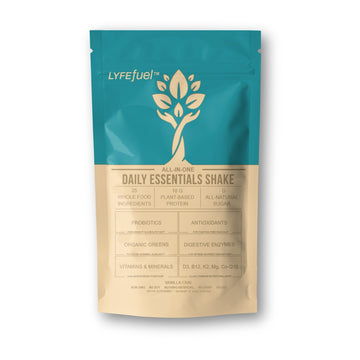
Essentials Shake
Vanilla Chai · 24 servings
★★★★★★★★★★ 4.63 (1566)

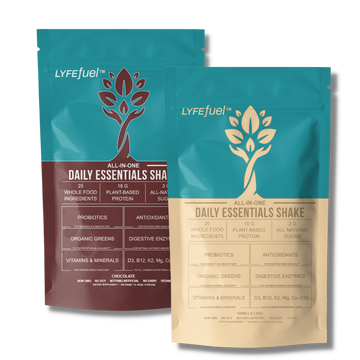
Essentials Bundle
2x Vanilla · free shaker
★★★★★★★★★★ 4.63 (1566)
Key Takeaways
- Total sugar and added sugar are different numbers. A shake with 3g total sugar that is fully added sugar is a different product than one with 3g total sugar mostly from fruit.
- There is no legal definition of "low sugar" for meal replacements. Under 5g added sugar per serving is a reasonable working line.
- Sweeteners are not interchangeable. Stevia and monk fruit are non-caloric plant extracts. Sugar alcohols like erythritol and maltitol are a different chemical class and are the most common cause of shake-related bloating.
- Low sugar does not mean low appetite risk. Without fiber and fat, a low sugar shake can digest fast and leave you hungry within the hour, the same problem sugar itself causes.
- Fruit sugar inside whole ingredients is not the same as added syrup. The Nutrition Facts panel does not distinguish where "total sugar" comes from unless you check the ingredient list.
Total sugar vs added sugar, and why the difference matters
The Nutrition Facts panel lists two sugar numbers, and only one of them tells you what the manufacturer put in. Total sugar is every gram of sugar in the product, whether it came from an added sweetener, from the natural sugar in a fruit powder, or from a starch that breaks down partway to sugar. Added sugar is the subset that was mixed in as a sweetener rather than arriving attached to a whole food ingredient.
This distinction is where most "low sugar" marketing gets misleading. A product can carry a low total sugar number and still be built on added sweetener with no whole food sugar at all, or the reverse: a modest total sugar number that is mostly incidental sugar from a fruit or vegetable blend rather than a syrup. Reading total sugar alone tells you the size of the number. Reading added sugar tells you where it came from.
For a meal replacement specifically, added sugar is the number worth anchoring on, because it reflects a formulation choice rather than an unavoidable feature of using real food ingredients. A shake or bar with 1 to 3g added sugar is doing the sweetening job with a non-sugar sweetener and letting whatever sugar shows up ride in naturally.
What counts as low sugar in practice
There is no FDA definition of "low sugar" for meal replacement shakes or bars the way there is a legal threshold for "low fat" or "low sodium." In practice, most products that market themselves as low sugar sit at 5g or under per serving of added sugar, with many landing at 0 to 3g by leaning on stevia, monk fruit or sugar alcohols instead.
A useful gut check: compare the sugar number to the calorie count. A 400 calorie shake with 3g sugar is meaningfully different from a 110 calorie shake with 3g sugar, because sugar makes up a much smaller share of the total formula in the first case. Percentage of calories from sugar is a more honest comparison across products of different sizes than the raw gram number alone.
Also check where in the ingredient list the sweetener sits. A sweetener several ingredients down the list, behind protein and fiber sources, is doing less overall work in the formula than one listed second or third.
Sweetener types compared honestly
Not all low sugar sweeteners behave the same way, and lumping them together is where a lot of confusion starts.
Stevia is a plant leaf extract, non-caloric, and roughly 200 to 300 times sweeter than sugar by weight, so a small amount goes a long way. It can carry a mild bitter or licorice aftertaste for some people, which is a taste preference rather than a digestive issue.
Monk fruit is also a non-caloric plant extract, generally considered to have a cleaner aftertaste than stevia, though it is typically more expensive to source, which is part of why it shows up less often in low cost products.
Sucralose is a synthetic, non-caloric sweetener built from a modified sugar molecule. It does not raise total sugar or added sugar on the label, but some people report a metallic aftertaste at higher concentrations, and it is worth knowing it is not plant-derived if that matters to you.
Sugar alcohols, which include erythritol, maltitol, xylitol and sorbitol, are a separate category entirely. They are carbohydrates that the body absorbs slowly and incompletely, which is exactly why they carry fewer calories than sugar and register as low or no impact on the sugar line. That same incomplete absorption is why they are the most common cause of bloating, gas and digestive discomfort in low sugar shakes and bars, especially at higher doses or for people sensitive to fermentable carbohydrates. Maltitol is generally worse for this than erythritol, since more of it reaches the gut undigested. If a low sugar product bloats you and you cannot pin down why, the sugar alcohol line on the ingredient list is the first place to look, not the sweetener you assume is the culprit.
None of these four categories is inherently "bad." The honest framing is that each behaves differently, and a low sugar label alone does not tell you which one you are getting.
Why low sugar can still mean hungry an hour later
Low sugar addresses one variable in satiety and ignores two others, which is why a low sugar shake can still leave you reaching for a snack shortly after.
Sugar on its own tends to digest quickly, which is part of why a sugary snack can leave you hungry again soon after, but removing the sugar does not automatically fix satiety if the product is also low in fiber and fat. Fiber slows digestion and adds bulk, which is a large part of what makes a whole food meal feel like a meal. Fat does the same job through a different mechanism and is also required for the body to absorb fat-soluble vitamins A, D, E and K. A shake that is low sugar but also low fiber and low fat can digest in well under an hour, at which point the sugar content was never the limiting factor for how long you stayed full.
This is worth knowing before assuming a low sugar claim solves an appetite problem. The fix is usually adding fiber and fat back in, whether that is blending in fruit, a spoon of nut butter, or oats, rather than chasing an even lower sugar number.
Fruit sugar in whole ingredients vs added syrups
A berry, greens or fruit blend listed by name on an ingredient panel contributes some natural sugar, and that sugar arrives with fiber, polyphenols and water content still attached, the same way it would if you ate the fruit whole. An added syrup, whether cane syrup, rice syrup, agave or a similar concentrated sweetener, delivers sugar with almost none of that surrounding structure.
Both show up as "sugar" on the panel, and the total sugar number does not distinguish them. The way to tell the difference is the ingredient list: a small amount of a named fruit or vegetable powder low on the list contributes a small, mostly incidental sugar amount, while a syrup listed higher up is doing deliberate sweetening work. This is also why a product built on whole food blends can show a nonzero total sugar number without that number reflecting an added sugar decision, and why added sugar, not total sugar, remains the number to check first.
How LyfeFuel Essentials measures up against these criteria
Measuring our own products against the four checks above, honestly, including where the numbers are not zero:
- Added sugar, shake: Chocolate is 3g total sugar, all 3g added. Vanilla Chai is 5g total carb with 1g of its sugar content added. Both are sweetened with stevia leaf extract, not sugar alcohols, so "low sugar" here is accurate at 3g, not "no added sugar" or "sugar free," which would not be.
- Added sugar, bars: Fudgy Maca Brownie carries 6g total sugar with 1g added. Ginger Lemon Tart carries 6g total sugar with 0g added. Both bars are sweetened with monk fruit rather than a sugar alcohol.
- Sweetener choice: stevia in the shake, monk fruit in the bars. Neither uses erythritol or maltitol, which is why our products do not carry the bloating risk associated with sugar alcohol sweeteners.
- Fiber and fat, where low sugar meets satiety: the shake is 110 calories, 2g fat and 1g fiber per scoop, which is a base rather than a complete meal on its own. It needs added fat and fruit to avoid the fast-digesting, hungry-again-soon problem described above. The bars carry 12g to 14g fiber depending on flavor, which is where fiber is genuinely strong in this lineup, not the shake.
- Where the sugar comes from: the shake's whole food blends, berry, greens, seed and botanical, are listed by name on the panel and contribute the incidental sugar alongside the added stevia-sweetened base. There is no added syrup in either product line.
Frequently asked questions
Is a low sugar meal replacement automatically healthier?
Not automatically. Low sugar addresses one part of the formula. Fiber, fat, protein and the micronutrient panel matter just as much for whether the product actually functions as a meal.
What is a good added sugar target for a meal replacement?
5g or under per serving is a reasonable working line, and many low sugar products land between 0 and 3g by using stevia, monk fruit or sugar alcohols instead of sugar.
Do sugar alcohols count as sugar on the label?
They are listed separately from sugar on most panels and generally do not count toward the sugar or added sugar line, which is part of why they show up in products marketed as low sugar or sugar free.
Why does a low sugar shake or bar cause bloating?
The most common cause is a sugar alcohol such as erythritol or maltitol, which the body absorbs slowly and incompletely. Check the ingredient list for these before assuming the protein or fiber source is the problem.
Is stevia or monk fruit better?
Both are non-caloric plant extracts. Stevia can carry a mild bitter aftertaste for some people, while monk fruit is generally considered cleaner tasting but is typically more expensive to source. Neither is linked to the bloating that sugar alcohols cause.
Will a low sugar meal replacement keep me full?
Not on its own. Fullness depends more on fiber and fat than on the sugar number. A low sugar shake that is also low in fiber and fat can leave you hungry sooner than a higher sugar option that includes both.
Does fruit in a meal replacement count as added sugar?
No. Sugar from a named whole food ingredient like a berry or fruit blend counts toward total sugar but not toward added sugar, since it was not mixed in as a sweetener. Check the ingredient list to see how far down that ingredient sits.