Meal Replacement Shakes for Women: What Actually Matters on the Label
The best meal replacement shake for a woman is usually not one marketed "for women," it is one with enough protein for her body weight and activity, a vitamin panel that covers iron, folate, calcium and vitamin D, and a calorie count that matches the meal it replaces. A few nutrient needs genuinely differ for women, so the label, not the pink packaging, is where you find out whether a shake covers them.
Shop the Essentials range
View all products →
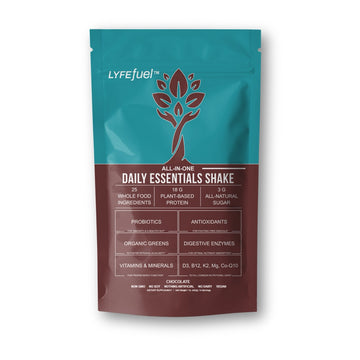
Essentials Shake
Chocolate · 24 servings
★★★★★★★★★★ 4.63 (1574)

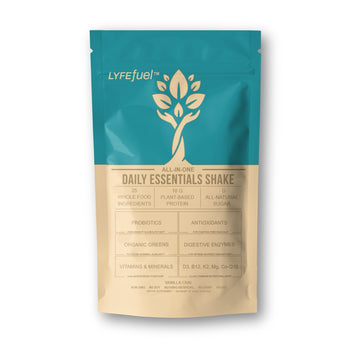
Essentials Shake
Vanilla Chai · 24 servings
★★★★★★★★★★ 4.63 (1574)

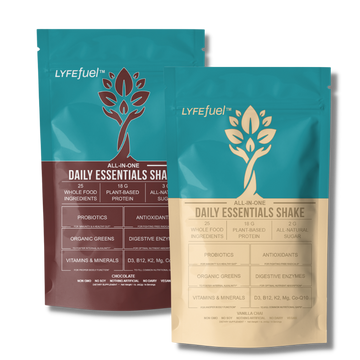
Essentials Bundle
2x Vanilla · free shaker
★★★★★★★★★★ 4.63 (1574)
Key Takeaways
- A "women's" shake is mostly a marketing category. The real differences are a handful of nutrients, not a different kind of product.
- Women of reproductive age need more iron than men, and anyone who could become pregnant is advised to get folic acid daily. Check both on the panel.
- Protein needs scale with body weight and activity, not gender, and many women eat less protein than they think, especially at breakfast.
- Some "for her" formulas cut protein and calories and charge the same price. Compare grams of protein per serving before anything else.
- If you are pregnant, breastfeeding or managing a medical condition, talk to your doctor before using any meal replacement.
Do women need a "women's" meal replacement shake?
Mostly, no. A meal replacement shake does the same job for anyone: it supplies protein, calories and a spread of vitamins and minerals in a form you can make in a minute. The body of a woman and the body of a man use protein, carbohydrate and fat the same way, and most of the vitamins and minerals on a Supplement Facts panel have the same or similar targets for both.
What does differ is a short list, and it is worth knowing so you can check for it rather than paying for a label that implies it:
Iron. Women who menstruate lose iron every month, so official intake targets for women from roughly 19 to 50 are more than double the target for men of the same age. After menopause the target drops to the same level as men. Iron is also one of the most common nutrient shortfalls in women, which makes it the single most useful line to check on a shake panel.
Folate. Public health guidance in the US advises that anyone who could become pregnant get 400 micrograms of folic acid daily, because folate matters in the earliest weeks of pregnancy, often before a pregnancy is known. Folic acid is the synthetic form used in supplements and fortified foods, and it is well absorbed.
Calcium and vitamin D. Calcium targets rise for women after about age 50, and vitamin D works alongside calcium for bone health. Neither is unique to women, but bone density changes after menopause make these two worth a look as you get older.
Protein. This one is not a gender difference at all, which is the point. Protein needs scale with body weight, age and activity. A smaller woman who does not train needs less than a larger woman who lifts three times a week, and both may need more than a sedentary man. A formula designed around gender rather than body size and activity is solving the wrong problem.
So the honest answer to "do I need a women's shake" is: you need a shake that covers these nutrients well. It may or may not say "women" on the front.
The "for her" problem: less protein, same price
A pattern worth knowing about in this category is the "for her" or "slim" version of an existing product. Sometimes these are genuinely reformulated with more iron or folate. Often the main change is fewer calories and less protein per scoop, plus pink or pastel packaging, at the same price per container or higher.
Lower calories can be a reasonable design choice if the shake is meant as a light snack. But cutting protein is usually the wrong trade for a product meant to replace a meal, because protein is what makes a meal replacement keep you full for more than an hour. A shake with very little protein tends to feel like a sweet drink, not a meal, and many people end up eating again shortly after.
The quick test is to put the "women's" version and the standard version side by side and compare:
1. Grams of protein per serving.
2. Iron and folate (or folic acid) on the panel, and the percent Daily Value for each.
3. Calories per serving.
4. Price per serving, not price per container, since serving sizes often differ.
If the women's version has less protein, the same iron and folate, and the same price per serving, you are paying for the packaging. If it has meaningfully more iron and folate with the same protein, the label is earning its name.
What to check on the label
Run these five checks in order. They cover almost everything that separates a useful shake from a disappointing one.
1. Protein per serving. The general Dietary Reference Intake is 0.8 grams of protein per kilogram of body weight per day, and that is a floor to avoid deficiency, not an optimal target for active people or older adults. For a shake meant to replace a meal, look for roughly 15 to 30 grams of protein in the serving you will actually drink. Below that it behaves more like a snack. If the protein is plant-based, a blend such as pea plus rice covers the amino acid gaps each has on its own, since pea is low in methionine and rice is low in lysine.
2. Iron and folate on the Supplement Facts panel. Look for both by name and amount. If iron is missing entirely, that is fine if you get enough from food or take it separately, but you should know it. Note that iron is absorbed better alongside vitamin C and worse alongside calcium or coffee and tea, so timing matters a little.
3. Calories matched to how you will use it. A shake replacing breakfast for an active woman needs a different calorie count than one used as a mid-afternoon snack. Many powders are a base, low in calories when mixed with water, and become a real meal only once you add milk, nut butter, fruit or oats. Neither approach is wrong. Just know which one you are buying and build accordingly.
4. Sweeteners and sugar. Read the total sugar and the added sugar line separately. Then check the sweetener: stevia, monk fruit, sucralose and sugar alcohols such as erythritol all taste different, and some people find one or another hard to tolerate. Sugar alcohols in particular can cause bloating in larger amounts.
5. Digestive tolerance and allergens. Whey and casein are dairy proteins, which some women do not tolerate well. Soy, gluten and tree nuts also show up in this category. Greens blends can contain wheatgrass or barley grass, which may carry a wheat allergen statement even when the product contains no flour. Read the "Contains" line, not just the front of the bag.
Life-stage notes: pregnancy, breastfeeding and perimenopause
Nutrient needs shift across a woman's life, and a few stages deserve specific care.
Pregnancy and breastfeeding. Talk to your doctor or midwife before using any meal replacement shake during pregnancy or while breastfeeding. Needs for calories, protein, iron, folate, iodine and choline all change in these periods, and many prenatal vitamins already supply some of the same nutrients a shake does, so stacking them can push certain nutrients higher than intended. Some herbal or botanical ingredients found in shakes have not been well studied in pregnancy either. A shake can still be part of the picture, but your clinician should help decide how.
Trying to conceive. This is where the folic acid guidance above matters most. If you could become pregnant, check whether your shake, your multivitamin and any fortified foods together give you the advised daily amount, and ask your doctor if you are unsure.
Perimenopause and menopause. We are not going to tell you a shake will change symptoms, because no shake label can promise that. What general guidance does support is that muscle mass tends to decline with age, and that adequate protein spread across the day, combined with regular strength training, helps maintain it. Calcium and vitamin D needs also become more relevant after menopause, while iron needs drop. If your shake is heavy in iron and you are past menopause, that is worth knowing, especially if you also take a multivitamin.
Older adults. Appetite often shrinks with age while protein needs stay the same or rise. A shake can be a practical way to get protein into a day when full meals feel like too much.
If you have a diagnosed condition, take medication, or have been told you have low iron or another deficiency, bring your shake label to your doctor. A label can tell you what is in the product. It cannot tell you what your body needs.
How to use a meal replacement shake well
A shake works best as a tool for the meal you are most likely to skip or do badly, which for many women is breakfast or a rushed lunch at a desk. A few practical rules:
Build it into a meal. If the powder is low in calories and fat on its own, add something with fat and fiber: a tablespoon of nut butter, half a banana, a handful of berries, oats, chia or flax, or milk instead of water. Fat helps you absorb vitamins A, D, E and K, and it also makes the shake keep you full longer.
Replace one meal, not all of them. One shake a day, occasionally two, alongside real meals with vegetables, legumes, whole grains and protein foods is a sensible ceiling. No powder reproduces the full variety of a mixed diet.
Spread your protein. Protein tends to be lightest at breakfast and heaviest at dinner. Using a shake in the morning is an easy way to even that out.
Be realistic about weight. A shake does not cause weight loss on its own. It only creates a calorie deficit if it contains fewer calories than the meal it replaced, and that depends on how you make it and what you eat the rest of the day. If weight is a goal, a dietitian or doctor can help you set targets that fit your body.
Keep it simple to repeat. The shake that helps is the one you will actually make on a busy morning. Pick a flavor you like with water or milk alone, keep a shaker at work, and settle on two or three add-ins you always have at home.
Pay attention to how you feel. Bloating, an upset stomach or hunger an hour later are all useful signals. They usually point to a sweetener, an allergen, too little protein or too few calories for how you are using the shake.
How LyfeFuel Essentials measures up on these criteria
Here is our Essentials Nutrition Shake against the checks above, including where the numbers are modest.
- Protein: 18g per scoop from Canadian yellow pea and organic rice protein, the complementary pairing described above. That sits in the meal replacement range, and it is the same formula for everyone. We do not make a lower-protein "for her" version.
- Iron, folate, calcium and vitamin D: the panel lists 27 vitamins and minerals by name and amount, including folic acid and vegan D3 from lichen (Vitashine), plus K2 as MK-7. Check the panel for the exact iron, folate, calcium and vitamin D amounts against your own needs. The vitamin and mineral premix is a standard synthetic one, normal for the category. We are not going to call it food-sourced.
- Calories: 110 calories and 2g fat per scoop with water. That is a base, not a complete meal. Add nut butter, fruit or milk to turn it into one.
- Sweetener and sugar: sweetened with stevia leaf extract, no sugar alcohols. Chocolate has 3g sugar, all of it added. Vanilla Chai has 3g with 1g added.
- Fiber: 1g per scoop, which is low. Pair it with fruit, oats or one of our bars if you want fiber in the same meal.
- Tolerance and allergens: no dairy and no soy. It contains tree nuts (coconut) and wheat, from the wheatgrass in the greens blend, so it is not a fit if you avoid wheat. The base also includes a 5-strain probiotic blend, digestive enzymes and named whole food blends, each ingredient listed on the label.
Frequently asked questions
Are meal replacement shakes for women different from regular ones?
Usually not in any way that matters. A few nutrients genuinely differ for women, mainly iron before menopause and folate for anyone who could become pregnant, but a standard shake can cover those well. Compare the protein, iron and folate lines rather than trusting the label on the front.
How much protein should a woman look for in a meal replacement shake?
For a shake meant to replace a meal, roughly 15 to 30 grams per serving is a reasonable range. Your total daily need depends on body weight, age and activity, with 0.8 grams per kilogram as the general minimum.
Can I drink a meal replacement shake while pregnant or breastfeeding?
Talk to your doctor or midwife first. Nutrient needs change during pregnancy and breastfeeding, and a shake combined with a prenatal vitamin can push some nutrients higher than intended.
Should a women's shake contain iron?
It is helpful for women who menstruate, since their iron needs are higher. After menopause iron needs drop, so a high-iron shake plus a multivitamin may be more than you need. Ask your doctor if you have been told your iron is low or high.
Will a meal replacement shake help with weight loss?
Only if it has fewer calories than the meal it replaces, and that depends on how you make it and what else you eat. A shake is a convenient way to control a meal, not a weight loss treatment on its own.
Are meal replacement shakes good for women in perimenopause?
A shake can help you get enough protein, which supports muscle maintenance alongside strength training as you age. It will not treat symptoms. If you have concerns about menopause symptoms, speak with your doctor.
Can I replace two meals a day with shakes?
Occasionally, yes, but one shake a day alongside real meals is a more sustainable pattern for most people. Whole foods provide fiber and variety no powder fully replaces.
Related guides
- Best meal substitute shakes
- Dairy free meal replacement shakes
- Healthy meal replacement shakes
- High protein meal replacement
- Lactose free meal replacement shakes
- Low calorie meal replacement shakes
- Low sugar meal replacement
- Meal replacement protein powder
- Meal replacement shakes for breakfast
- Meal replacement shakes for seniors
- Meal substitute powder
- Nutritional meal replacement shakes
- Plant based meal replacement shakes
- Protein shakes without artificial sweeteners
- Vegan meal replacement