High Protein Meal Replacement: How Much Protein Does a Meal Actually Need
A high protein meal replacement should give you somewhere between 15g and 30g of protein from a source your body can actually use, not just the biggest number the label can print. Grams alone are a bad proxy for quality, and a shake built around a single incomplete protein or a scoop of collagen can hit an impressive number while still falling short of what a real meal delivers.
Shop the Essentials range
View all products →
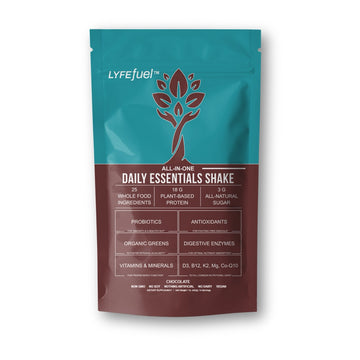
Essentials Shake
Chocolate · 24 servings
★★★★★★★★★★ 4.63 (1566)

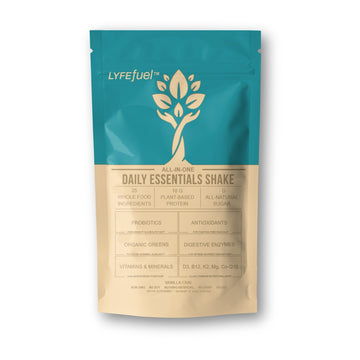
Essentials Shake
Vanilla Chai · 24 servings
★★★★★★★★★★ 4.63 (1566)

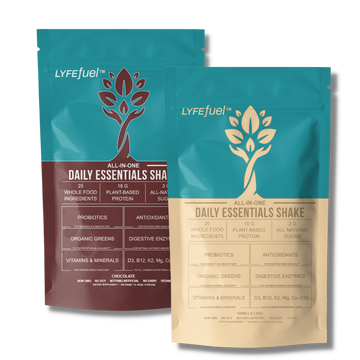
Essentials Bundle
2x Vanilla · free shaker
★★★★★★★★★★ 4.63 (1566)
Key Takeaways
- Most adults need roughly 20g to 35g of protein per meal, scaled to body weight and activity, not a flat "more is better" number.
- Protein quality matters as much as quantity. A single plant source usually has an amino acid gap; pairing two closes it.
- Grams on the front of the label do not tell you about completeness, digestibility, or what the rest of the formula is doing.
- Past roughly 30g to 40g in one sitting, the extra protein mostly stops adding satiety or muscle benefit and just adds cost.
- Collagen can be a good add-on but is not a complete protein and should never be the primary source in a meal replacement.
How much protein does a meal replacement actually need
The baseline most nutrition guidance uses for general protein intake is about 0.8g per kilogram of body weight per day, which is a minimum, not a target for someone trying to build or maintain muscle. Active adults and anyone strength training regularly tend to do better in a higher range, often discussed as roughly 1.2g to 1.6g per kilogram spread across the day. Translate that into a single meal and you land in a useful range: a 70kg (154lb) person eating three to four times a day is looking at something like 20g to 35g of protein per meal, not the 40g-plus that some "high protein" marketing implies is the goal.
A meal replacement that clears 15g to 30g in a single serving is doing its job for most people, most days. It does not need to hit 40g or 50g to count as high protein, and chasing that number usually means the formula is compensating for something else the shake is missing, like fiber or fat.
Protein by body weight and activity level, not by marketing number
The right protein target for a meal is personal, and body weight is the simplest starting point. A 130lb (59kg) person and a 220lb (100kg) person do not need the same gram count from a shake, even if they buy the same product. Someone sedentary needs less per meal than someone lifting four times a week or training for an event.
This is why a flat "30g of protein" claim printed on a label is a marketing shortcut, not a nutrition recommendation. It is one number applied to every body, regardless of size or activity. The more useful question to ask is not "how many grams does this have" but "how many grams do I need at this meal, given my size and how active I am today." For most adults eating three meals plus a shake, 18g to 25g per meal replacement lands well inside a reasonable range without requiring the shake to do more work than the rest of the day's food.
Why grams alone are a bad proxy for protein quality
A gram of protein is not a gram of usable amino acids. Protein quality depends on which amino acids are present, in what ratio, and how digestible the source is. Nutrition science has formal ways of scoring this (digestibility-adjusted amino acid scoring is the modern approach nutrition researchers use), but you do not need a lab score to apply the underlying logic at the label level: no single plant protein contains a full, balanced set of essential amino acids in ideal proportions.
Pea protein is a strong source of most essential amino acids but runs low in methionine. Rice protein is a decent source of methionine but runs low in lysine. Neither one alone is a complete match for what a meal needs, but combined, each one covers the other's shortfall. This is why pea plus rice is a common and sound pairing in plant-based meal replacements, and why a shake built on a single plant source, marketed purely on its gram count, is telling you less than it seems to.
Whey and soy are naturally more complete on their own, which is worth knowing if you are comparing sources rather than defaulting to whichever number is largest on the shelf.
Why more protein is not automatically better
Once a meal replacement clears roughly 30g to 40g of protein in a single sitting, most people are not getting a proportional return on the extra grams. The body uses what a given meal calls for and the rest is metabolized as any other calorie source. For satiety specifically, protein helps, but fat and fiber are doing real work too, and a shake that is 40g protein with almost no fat or fiber can still leave you hungry within the hour because the two nutrients most responsible for slowing digestion are missing.
This matters for how you shop. A shake advertising 35g of protein and almost nothing else on the panel is optimized for one number, not for the meal you are actually trying to replace. The better question is whether the whole formula, protein plus fat plus fiber plus a real micronutrient base, adds up to something that holds you until the next meal.
Protein timing across the day
Protein spread across meals tends to be used more effectively than the same total loaded into one large meal, largely because there is a practical ceiling on how much protein a single meal puts to use for things like muscle repair. Three to four servings of 20g to 30g spaced through the day is generally a better strategy than one 60g meal and two protein-light meals, even if the daily total is similar.
For a meal replacement specifically, this means the shake does not need to carry your entire day's protein target by itself. It needs to carry its share of the meal it is replacing, which is the 15g to 30g range covered above, while the rest of your day fills in the remainder from other food.
Common mistakes when choosing a high protein meal replacement
Over-indexing on 30g-plus as the deciding factor. A bigger number is not automatically a better meal. Check what else is in the formula before the protein count decides the purchase.
Treating collagen as a primary protein source. Collagen is missing tryptophan and is low in several other essential amino acids, which makes it an incomplete protein on its own. It has a legitimate place as an add-in for skin, joint or connective tissue support, but a meal replacement built primarily around collagen is not delivering complete protein nutrition, regardless of the gram count on the label.
Ignoring the rest of the plate. A shake with excellent protein and almost nothing else, no fiber, minimal fat, a thin micronutrient panel, is not a complete meal replacement. Protein is one column on the label, not the whole test.
Assuming higher protein means the shake is a weight loss product. Protein does support satiety, but a shake only creates a calorie deficit if it has fewer calories than what it replaced. A high protein shake eaten in addition to your normal meals adds calories like anything else would.
Not accounting for your own size and activity. A 25g shake might be plenty for one person and light for another. Match the product to your body weight and how active you are, not to whatever number the marketing leads with.
If you are pregnant, managing a medical condition, taking prescription medication or on a GLP-1 medication, talk to your doctor or dietitian before making any high protein shake a daily habit. Protein needs and safe upper ranges vary by individual health status.
How LyfeFuel Essentials measures up on protein
Measuring our own shake against the criteria above, including where it does not lead:
- Protein amount: 18g per scoop, which sits inside the 15g to 30g useful range for a single meal rather than chasing a 30g-plus marketing number.
- Protein quality: Canadian yellow pea and organic rice protein, the complementary pairing described above, chosen specifically to cover the amino acid gaps either source has on its own.
- Not built around collagen. The 18g comes from the pea and rice pairing, not from collagen or another incomplete source.
- Where it needs help: 2g fat and 1g fiber per scoop, both low. Protein alone will not carry satiety here, so we tell people to add a fat source and fruit or oats, and our bars carry 12g to 14g fiber if you want to pair the two.
- Calories: 110 per scoop, a base rather than a full meal on its own, which is consistent with how we ask people to build it out.
- Bars, for comparison: Fudgy Maca Brownie carries 11g protein with 14g fiber; Ginger Lemon Tart carries 12g protein with 12g fiber. Neither is "high protein" on its own, which is why they are positioned as a fiber-forward complement to the shake rather than a protein-first product.
Frequently asked questions
How much protein should a high protein meal replacement have?
Most people do well with 15g to 30g per serving, scaled to body weight and activity level. Numbers well above 40g are usually a marketing choice, not a nutritional requirement for a single meal.
Is more protein always better in a meal replacement?
No. Past roughly 30g to 40g in one sitting, extra protein stops adding much satiety or benefit and mostly adds cost. Fat and fiber matter just as much for feeling full until your next meal.
Can collagen be the main protein in a meal replacement?
It should not be. Collagen is missing tryptophan and is low in other essential amino acids, so it is an incomplete protein on its own. It works as an add-in, not as the primary protein source.
Why pair pea and rice protein instead of using just one?
Pea protein is low in methionine and rice protein is low in lysine. Combined, each source covers the other's gap, which gets you closer to a complete amino acid profile than either one alone.
Does a high protein shake help with weight loss?
Only if it has fewer calories than the meal it replaces. Protein supports satiety, but the shake itself is not a weight loss mechanism, and drinking one in addition to your normal meals adds calories rather than cutting them.
How much protein do I personally need per meal?
It depends on your body weight and activity level. A common range discussed for active adults is about 1.2g to 1.6g per kilogram of body weight per day, spread across three to four meals, which works out to roughly 20g to 35g per meal for most adults.
Is it better to get 30g of protein in one meal or spread it across the day?
Spreading it across three to four meals of 20g to 30g each is generally more effective than loading most of your protein into a single large meal, since there is a practical limit to how much a single meal is used for.