Protein Powder With Probiotics: Strains, CFU and Enzymes Explained
A protein powder with probiotics is worth buying when the label names the bacteria down to the strain, states the CFU count through the expiry date, and still delivers a solid protein dose without fillers. Treat the probiotics and digestive enzymes as a bonus on top of a good protein powder, not the reason to buy a weak one, because the dose in a scoop is usually smaller than in a dedicated supplement.
Shop the Essentials range
View all products →
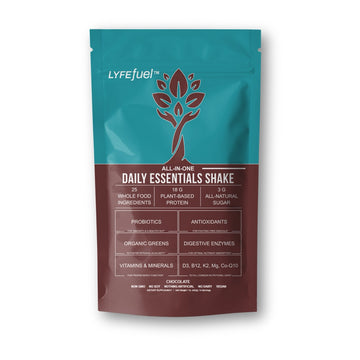
Essentials Shake
Chocolate · 24 servings
★★★★★★★★★★ 4.64 (1587)

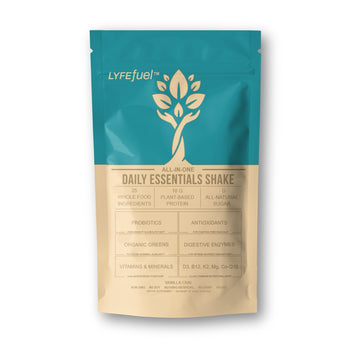
Essentials Shake
Vanilla Chai · 24 servings
★★★★★★★★★★ 4.64 (1587)

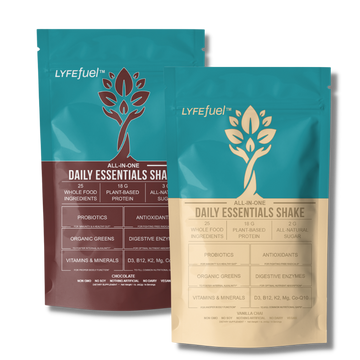
Essentials Bundle
2x Vanilla · free shaker
★★★★★★★★★★ 4.64 (1587)
Key Takeaways
- Probiotic effects are strain-specific. A label that names only the species tells you much less than one that names the exact strain.
- CFU counts can be stated "at time of manufacture" or "through expiration." The second is the stronger promise, because live bacteria decline over time.
- Heat and moisture kill many probiotics. Mix with cold or room-temperature liquid and keep the tub sealed and dry.
- Digestive enzymes help break down protein, carbohydrate, fat or lactose. Activity units tell you more than milligrams.
- Most protein powders with probiotics carry a smaller dose than a standalone probiotic. Judge the protein first.
What probiotics in a protein powder actually are
Probiotics are live microorganisms that, when taken in adequate amounts, provide a health benefit to the person taking them. That definition, used by the World Health Organization and most researchers, has two parts worth noticing: the bacteria have to be alive, and the amount has to be enough.
In protein powders, the bacteria are almost always from two groups. Lactobacillus species (some now renamed, more on that below) and Bifidobacterium species are the most studied probiotics and are naturally found in fermented foods and the human gut. Some powders also use Bacillus coagulans or similar spore-forming bacteria, which survive heat and storage better because they sit in a dormant, protective spore until they reach a moist environment.
The reason brands add them to protein powder is simple convenience. If you already drink a shake every day, adding bacteria to it is one less thing to remember. That is a real benefit, but it only holds if the bacteria are the right ones, in a meaningful amount, and still alive when you drink them.
Strains, species and why the name on the label matters
The single most useful thing to check is how specifically the bacteria are named. A full probiotic name has three parts: genus, species and strain. For example, in *Lacticaseibacillus rhamnosus* GG, *Lacticaseibacillus* is the genus, *rhamnosus* is the species, and GG is the strain.
The strain matters because research findings belong to strains, not to whole species. Two strains of the same species can behave differently in the gut. When a study reports a result, it applies to the strain tested, at the dose tested. A label that lists only "*L. acidophilus*" may contain a well-researched strain or an unstudied one, and you cannot tell which.
A few practical rules:
1. Strain codes are a quality signal. Letters and numbers after the species name (GG, BB-12 and similar) show the brand knows exactly what it bought.
2. More strains is not automatically better. A blend of 10 strains at a low total dose spreads each one thin. Two or three well-chosen strains at a solid dose can be the better product.
3. Expect the names to look unfamiliar. In 2020 scientists reclassified the *Lactobacillus* genus into several new genera. *L. plantarum* is now *Lactiplantibacillus plantarum* and *L. rhamnosus* is now *Lacticaseibacillus rhamnosus*. Labels are catching up slowly, so you will see both old and new names. They refer to the same organisms.
If a powder lists only a "proprietary probiotic blend" with no species at all, treat the probiotic claim as marketing.
How to read CFU on a protein powder label
CFU stands for colony-forming units, a count of live bacteria capable of multiplying. It is the standard way probiotic doses are written.
Check when the count applies. "At time of manufacture" means the count was measured when the product was made. "Through expiration" or "at end of shelf life" means the brand has formulated enough extra bacteria to still hit that number on the last day you could use it. The second phrasing is the stronger promise. Live bacteria decline over time, and the rate depends on the strain, the formula, the packaging and how the product is stored.
Compare the dose to your goal. Standalone probiotic supplements commonly list doses in the billions or tens of billions of CFU. Protein powders often carry less, because the probiotic is a secondary ingredient. A lower count is not useless, but if you are taking probiotics for a specific reason, a protein powder alone may not match the dose used in the research you have read about. Match the strain and dose to the evidence rather than chasing the biggest number.
Look for the probiotic's weight too. A blend listed at 50mg to 100mg is small in the context of a 30g to 40g scoop, which is normal. What matters is the CFU, not the milligrams.
Can probiotics survive in protein powder?
They can, with limits. Dry powder is actually a reasonable home for many probiotics, because bacteria are freeze-dried into a dormant state and stay that way while the powder is dry. The two main threats are moisture and heat.
- Moisture. Every time the tub is opened in a humid kitchen, a little water gets in. Close it tightly, keep the scoop dry, and store it away from the stove and dishwasher.
- Heat. Many *Lactobacillus* and *Bifidobacterium* strains are damaged by heat. Do not stir a probiotic powder into hot coffee, hot oatmeal or baking. Mix with cold or room-temperature liquid. Spore-forming *Bacillus* strains tolerate heat better, which is why some brands choose them.
- Time after mixing. Drink a mixed shake within a reasonable time rather than leaving it in a warm car all day.
Stomach acid is the next hurdle once you drink it. Some strains tolerate acid well, and taking probiotics with food tends to buffer the stomach. A protein shake, which contains food, is a reasonable vehicle for that reason.
Digestive enzymes: what they do and how to judge them
Many powders that include probiotics also add a digestive enzyme blend. The two are different. Probiotics are live bacteria. Enzymes are proteins that speed up the breakdown of food.
The common enzymes and their jobs:
- Protease breaks down protein.
- Amylase breaks down starch.
- Lipase breaks down fat.
- Lactase breaks down lactose, the sugar in milk.
- Cellulase breaks down cellulose, a structural fiber in plants that humans cannot digest on their own.
- Bromelain and papain, from pineapple and papaya, are protein-digesting enzymes found in some formulas.
Your body already makes most of these, except cellulase. The case for adding them to a protein powder is that a large dose of protein or plant material at once is a lot to process, and some people find a shake sits better with enzymes in it. Evidence for routine enzyme use in healthy people is limited, so think of them as a comfort feature rather than a nutritional upgrade.
How to judge an enzyme blend: enzymes are measured by activity, not weight. Units like HUT or PC for protease, DU for amylase, FIP or LU for lipase and ALU for lactase tell you how much work the enzyme can do. A label that lists only milligrams tells you how much enzyme powder is present, not how active it is. Activity units are the stronger disclosure.
Who should be careful with probiotic protein powder
For most healthy adults, probiotics in food and supplements are considered low risk. A few groups should talk with their doctor first:
- People with a weakened immune system, including those on chemotherapy or immune-suppressing medication.
- People who are seriously ill, recovering from surgery, or have a central line or catheter.
- Anyone with a diagnosed digestive condition, where specific strains may or may not be appropriate.
- People who are pregnant or breastfeeding, as with any new supplement.
Some people notice extra gas or a change in digestion in the first week or two of a new probiotic. That usually settles. If bloating continues, the protein or the probiotic may not be the cause. Sugar alcohols, gums and large doses of added fiber are common triggers in protein powders, so check those lines too. If digestive symptoms persist, talk with your doctor rather than switching products repeatedly.
And keep the bigger picture in view. Fermented foods such as yogurt, kefir, sauerkraut, kimchi and miso, along with a varied, fiber-rich diet, do more for your gut than any single scoop.
How LyfeFuel Essentials measures up on these criteria
Our Essentials Nutrition Shake is a plant-based protein base with probiotics and enzymes included, so here is how it scores on the checklist above, weak points included.
- Strains: five probiotic species: *Lactobacillus acidophilus* DDS, *L. plantarum*, *L. rhamnosus*, *Bifidobacterium breve* and *B. longum*. Only the acidophilus carries a strain designation on the label. The other four are named to species level, which is a weaker disclosure by the standard above.
- CFU: 960 million CFU per serving, stated at time of manufacture, not through expiration. That is a modest dose compared with standalone probiotic supplements, so treat it as a daily bonus, not a replacement for a targeted probiotic.
- Enzymes: a Digestive Enzyme Blend of amylase, cellulase, lactase, lipase and protease at 50mg. The label lists weight, not activity units.
- Protein: 18g from Canadian yellow pea and organic rice protein, a complementary pair, in 110 calories. No dairy, no soy.
- Sugar and sweetener: 3g sugar per scoop (Chocolate is all added, Vanilla Chai 1g added), sweetened with stevia leaf extract. No sugar alcohols. Xanthan and guar gum are used for texture.
- Beyond protein: flax at 1,000mg, spirulina, a berry blend and organic greens. The 27 vitamins and minerals are a standard synthetic premix, typical for the category, and our next formulation is the one rebuilding that.
- As a meal: 1g fiber and 2g fat, so it is a base. Add fruit and a fat. Mix cold, never hot, to protect the probiotics.
- Allergens: contains coconut (tree nuts) and wheatgrass (wheat).
Frequently asked questions
Is it worth buying protein powder with probiotics?
It can be, if you already drink a protein shake daily and the label names the strains and states a CFU count. Judge the protein, sugar and ingredient list first. If you want probiotics for a specific reason, a dedicated supplement with the researched strain and dose is more reliable.
Do probiotics survive in protein powder?
Many do while the powder stays dry, because the bacteria are freeze-dried and dormant. Moisture, heat and time reduce the count. Keep the tub sealed and dry, and look for a CFU count guaranteed through expiration.
Can I mix a probiotic protein powder with hot liquid?
It is best not to. Heat damages many Lactobacillus and Bifidobacterium strains. Use cold or room-temperature liquid. Spore-forming Bacillus strains are more heat tolerant, so check which type your powder contains.
How many CFU should a protein powder with probiotics have?
There is no single right number, because the effective dose depends on the strain. Standalone probiotics commonly list billions of CFU per serving, and protein powders often carry less. A named strain at the dose used in research matters more than the biggest number.
What is the difference between probiotics and digestive enzymes?
Probiotics are live bacteria. Digestive enzymes are proteins that help break food down, such as protease for protein and lactase for milk sugar. Many protein powders include both, and they do different jobs.
Can probiotic protein powder cause bloating?
Some people notice gas in the first week or two of a new probiotic, which usually settles. Persistent bloating is more often caused by sugar alcohols, gums or high doses of added fiber. If it continues, talk with your doctor.
Who should avoid protein powder with probiotics?
People with a weakened immune system, serious illness, a central line, or a diagnosed digestive condition should ask their doctor before taking probiotics. The same applies during pregnancy or breastfeeding.
Related guides
- Best meal substitute shakes
- Dairy free meal replacement shakes
- Healthy meal replacement shakes
- High protein meal replacement
- Lactose free meal replacement shakes
- Low calorie meal replacement shakes
- Low sugar meal replacement
- Meal replacement protein powder
- Meal replacement shakes for breakfast
- Meal replacement shakes for seniors
- Meal replacement shakes for women
- Meal substitute powder
- Nutritional meal replacement shakes
- Plant based meal replacement shakes
- Plant based protein shakes
- Protein shakes without artificial sweeteners
- Vegan meal replacement