Best Meal Substitute Shakes: How to Judge Any of Them by the Label
The best meal substitute shake is not a fixed product, it is whichever shake clears a specific checklist for the specific meal you're replacing, since a shake standing in for breakfast needs different numbers than one standing in for a post-workout meal. This guide gives you that checklist, the four use-case categories shakes actually fall into, and the label red flags that separate a real meal substitute from a flavored protein drink.
Shop the Essentials range
View all products →
Essentials Shake
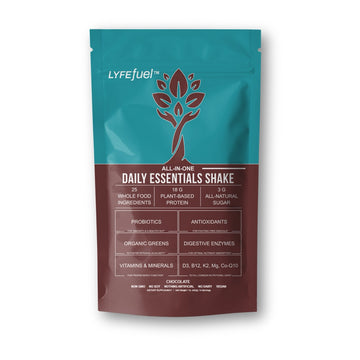
Chocolate · 24 servings
★★★★★★★★★★ 4.63 (1574)

Essentials Shake
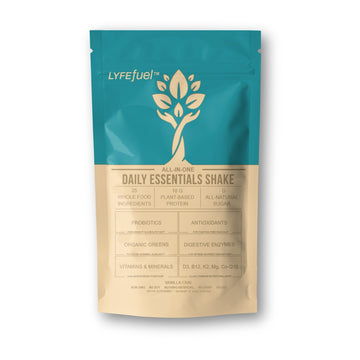
Vanilla Chai · 24 servings
★★★★★★★★★★ 4.63 (1574)

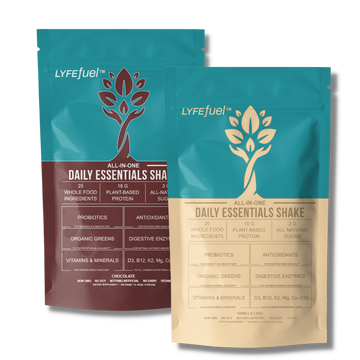
Essentials Bundle
2x Vanilla · free shaker
★★★★★★★★★★ 4.63 (1574)
Key Takeaways
- There is no universal "best" shake. There is the best shake for the meal you are actually replacing, and that changes the numbers you should be checking.
- Every shake falls into one of four use cases: meal base, full meal, post-workout, or weight management. Each has a different calorie and protein target.
- Comparing two labels side by side only works if you compare per-serving, not per-scoop-size, and you check added sugar separately from total sugar.
- Red flags are proprietary blends with no amounts listed, sugar alcohols dressed up as "natural sweeteners," and a fiber number that does not match the "meal" claim on the front of the bag.
- A shake with a strong label still needs fat and something whole added to it before it functions as an actual meal.
Why "best" depends on which meal you're replacing
Search for "best meal substitute shakes" and you'll get ranked lists that treat the category as one thing. It isn't. A shake meant to replace a rushed breakfast has a completely different job than one meant to replace a post-workout meal, or one meant to replace a dinner you're deliberately trying to shrink.
The calorie target alone proves it. A breakfast substitute working alongside two other normal meals can sit at 200 to 300 calories. A shake meant to be someone's only midday meal needs closer to 400 to 500. A post-workout shake is judged on protein timing and speed of absorption more than total calories. A weight-management shake is judged on whether it has fewer calories than the meal it's replacing, full stop.
So the honest starting point is not "which brand wins" but "which meal am I replacing, and does this shake's label match that job." Everything below is built around that question.
The four categories of meal substitute shake
Meal base. Lower calorie (100 to 250), meant to be built on with milk, fruit, nut butter or oats rather than drunk straight. The label alone won't look like a full meal because it isn't one yet. Judge it on protein quality, micronutrient completeness, and how well it takes an addition, not on calories in isolation.
Full meal. 300 to 500+ calories, meant to be consumed as-is or with just water. This is the category where fiber, fat and a complete micronutrient panel matter most, because there is no assumption that you're adding anything else.
Post-workout. Built around fast protein absorption, typically 20 to 40g protein, lower fiber and fat by design since digestion speed is the point, not satiety. This is a different job than a meal substitute and it's worth not conflating the two even when a brand markets one product for both uses.
Weight management. Lower calorie by design, often 150 to 300, framed around portion control rather than a full nutrient profile. The only honest test here is whether the shake has fewer calories than what you'd otherwise eat. The shake itself does not create the deficit. The gap between the shake and the meal it replaces does.
Most confusion in this category comes from a shake bought for one job being judged by the standards of another. A 110 calorie meal base is not a bad full meal. It was never trying to be one.
The checklist to judge any shake against
1. Calories relative to the meal you're replacing. Not an absolute number. If it's replacing a 250 calorie breakfast, 200 calories is fine. If it's replacing a 600 calorie dinner and you eat nothing else with it, you will be hungry.
2. Protein, 15g to 30g for a meal-sized shake. Check the protein source too. Pea protein is low in methionine, rice protein is low in lysine, and a pea-rice blend covers both gaps. Soy is a complete protein on its own. Whey is complete and absorbs quickly but is dairy, which rules it out for a chunk of shoppers.
3. Fiber, matched to the "meal" claim. A shake marketed as a full meal substitute should carry meaningful fiber. If it's under 2g, it is functioning as a meal base, not a full meal, regardless of what the front label says. Some fiber comes from the shake, some you're expected to add from whole food.
4. Fat, because it does two jobs. It slows digestion so you stay full, and it's required to absorb the fat-soluble vitamins A, D, E and K that are almost always on the panel. A near-zero-fat shake with those vitamins listed is only getting you partial value from them unless you drink it with something fatty.
5. Micronutrients listed by name and amount. A real panel names each vitamin and mineral with a specific amount and percent daily value. "Superfood blend, 2,000mg" with no breakdown tells you nothing. Also check whether the vitamin form is a synthetic isolate or something else, since most vitamin blends in this category are synthetic and that's standard for the category, not a defect specific to one brand.
6. Sweetener and added sugar, checked separately from total sugar. Stevia, monk fruit, sucralose and sugar alcohols all behave differently in taste and digestion. Total sugar includes anything naturally occurring in the blend, added sugar is what was put in on top of that. A shake can be low in added sugar and still show a few grams of total sugar from a fruit or root ingredient.
7. Allergens and what's excluded. Dairy, soy, tree nuts and gluten sources should be stated plainly, not buried. If a shake is dairy-free or soy-free, that should be checkable on the panel itself, not just claimed on the front.
Label red flags that mean walk away
Proprietary blends with a single combined weight. If six ingredients share one number like "Recovery Blend, 3,000mg" with no individual breakdown, you cannot tell whether ingredient one is 2,900mg and the rest are trace amounts. This is legal and common. It is still a red flag.
Sugar alcohols marketed as clean. Erythritol and maltitol are the most common causes of shake-related bloating. They're often listed as "natural sweeteners," which is true and also beside the point. If a shake gives you digestive trouble, check for these before blaming the protein.
A "meal replacement" claim on a shake under 150 calories with no serving guidance. If the label doesn't tell you to add milk, fruit or a fat source, and the calorie count is that low, something is being oversold.
Vitamin and mineral claims with no amounts. "Packed with vitamins" without a Supplement Facts panel listing each one by name and amount is a marketing claim standing in for a nutrition fact.
Vague protein sourcing. "Plant protein blend" with no named sources makes it impossible to check for the amino acid gaps described above.
How to compare two labels side by side
Line up calories, protein, fiber, fat, added sugar and micronutrient count, per serving, not per scoop weight, since scoop sizes differ between brands and that alone can make one shake look bigger than it is. Normalize to "per serving as directed" and the comparison gets honest fast.
Then ask the category question first: are these two shakes even trying to do the same job? Comparing a 110 calorie meal base against a 450 calorie full-meal shake and calling one "better" misses that they're built for different meals. The right comparison is within a category, meal base against meal base, full meal against full meal.
Finally, price per serving is worth checking, but it should be the last column you look at, not the first. A shake that's cheaper per serving and missing half the micronutrient panel of a pricier one isn't actually the better value if you have to buy separate supplements to close the gap.
If you're managing a medical condition, pregnant, on a GLP-1 medication or taking prescription medication, run any shake's label past your doctor or dietitian before making it a daily habit. Some micronutrient levels add up fast alongside other supplements you're already taking.
A quick worked example makes this concrete. Say you're comparing two shakes, both marketed as breakfast substitutes. Shake A lists 130 calories, 15g protein, 1g fiber, 1g fat and a "vitamin blend, 500mg" with no breakdown. Shake B lists 150 calories, 18g protein, 3g fiber, 2g fat and 20 named vitamins and minerals with amounts. On price alone Shake A might win by a dollar per serving. On the checklist, Shake B is doing more of the actual job of replacing a meal, even at a slightly higher calorie count and price. That's the tradeoff worth making deliberately rather than defaulting to whichever shake is cheaper or has the biggest protein number on the front of the bag.
How LyfeFuel Essentials fits into these categories
Run against the checklist above, plainly, including where it falls short:
Essentials Shake is a meal base, not a full meal on its own. At 110 calories and 2g fat per 33g scoop, it needs milk, fruit or a fat source added before it functions as a full meal, and we'd rather say that than let the front label imply otherwise. Protein is 18g from Canadian yellow pea and organic rice, the same complementary pairing described above for closing amino acid gaps. Fiber is 1g, which is low, and the honest fix is pairing it with whole fruit or our bars, which carry 12g to 14g fiber. The micronutrient side is a genuine strength on the checklist: 27 vitamins and minerals listed by name and amount, not buried in a blend, alongside whole food ingredients like spirulina, flax and pomegranate each named individually rather than combined into one number. Sweetener is stevia leaf extract in both flavors, 3g sugar in Chocolate with no sugar alcohols, which is why it avoids the bloating that erythritol-sweetened shakes commonly cause. It contains tree nuts and wheat, no dairy and no soy. Where it does not lead the category: the vitamin and mineral premix is a standard synthetic blend, which is normal for this category and not something we're going to dress up as whole-food sourced. That's a specific gap we're rebuilding in the next formulation, and we're naming it now rather than after it ships.
Frequently asked questions
What is the single best meal substitute shake?
There isn't one. The right shake depends on which meal you're replacing and whether you need a meal base to build on, a full meal as-is, fast post-workout protein, or a lower-calorie option for weight management. Match the category to the meal, then apply the label checklist.
How many calories should a meal substitute shake have?
It depends on the meal it's replacing and whether you're adding anything to it. A shake you're building on with milk and fruit can be 100 to 250 calories. A shake meant to be a complete meal as-is should be closer to 300 to 500.
Do meal substitute shakes actually help with weight loss?
Only if the shake has fewer calories than the meal it replaces. The shake itself is not a weight-loss mechanism. Drinking a 400 calorie shake in addition to your normal meals adds calories rather than creating a deficit.
Why do some meal substitute shakes cause bloating?
The usual causes are sugar alcohols like erythritol or maltitol, a large single dose of a fiber like inulin, or dairy protein for anyone lactose intolerant. Check the sweetener and fiber source before assuming it's the protein.
Is a higher protein number always better in a meal substitute shake?
Not necessarily. 15g to 30g covers most meal-sized needs. Past 30g in a single shake you're often paying for protein you don't need in one sitting if you're eating other meals that day, and post-workout shakes are built around a different, faster-absorption goal than meal substitution.
Can I compare shakes with different scoop sizes fairly?
Yes, but only if you normalize to per serving as directed rather than per gram of powder. Scoop weight differs by brand and by itself tells you nothing about calories, protein or fiber delivered.
Should I check for third-party testing or certifications when comparing shakes?
It's reasonable to ask, but confirm any claim directly against the brand's own documentation rather than assuming a badge on the label means what it implies. Not every shake that claims testing has published results to back it up.
Related guides
- Dairy free meal replacement shakes
- Healthy meal replacement shakes
- High protein meal replacement
- Lactose free meal replacement shakes
- Low calorie meal replacement shakes
- Low sugar meal replacement
- Meal replacement protein powder
- Meal replacement shakes for breakfast
- Meal replacement shakes for seniors
- Meal replacement shakes for women
- Meal substitute powder
- Nutritional meal replacement shakes
- Plant based meal replacement shakes
- Protein shakes without artificial sweeteners
- Vegan meal replacement