Meal Replacement Protein Powder: What It Is and How to Choose One
A meal replacement protein powder is designed to stand in for a whole meal, which means it has to deliver calories, protein, fiber, fat and a broad micronutrient base, not just protein. Most powders sold as meal replacements only clear the protein bar, so the label is where the decision gets made.
Shop the Essentials range
View all products →
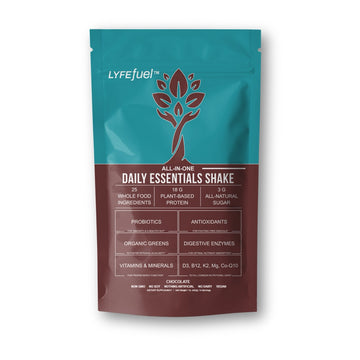
Essentials Shake
Chocolate · 24 servings
★★★★★★★★★★ 4.63 (1566)

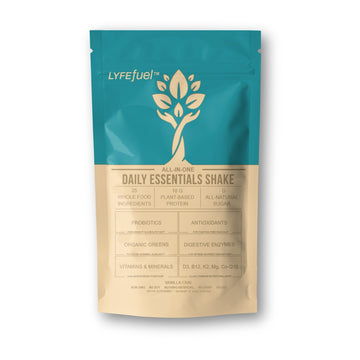
Essentials Shake
Vanilla Chai · 24 servings
★★★★★★★★★★ 4.63 (1566)

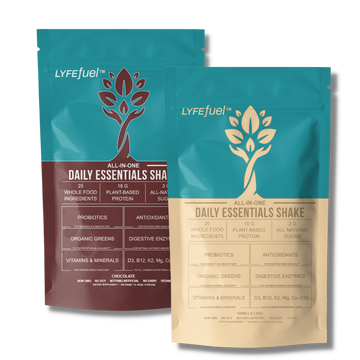
Essentials Bundle
2x Vanilla · free shaker
★★★★★★★★★★ 4.63 (1566)
Key Takeaways
- A protein powder adds protein. A meal replacement has to replace the nutrition of the meal you skipped.
- Look for 300+ calories if it is a full meal, 15g or more protein, meaningful fiber, some fat, and a real micronutrient panel.
- Complete plant protein needs complementary sources. Pea plus rice covers the amino acid gaps that either one has alone.
- Check the sweetener, the fiber source, and whether the micronutrients are listed by name and amount or hidden in a proprietary blend.
- Powder alone is rarely a satisfying meal. Adding fat and a piece of fruit is what closes the gap.
What counts as a meal replacement protein powder
The category name does a lot of work that the products do not always earn. A protein powder has one job: deliver protein. A meal replacement has to account for the whole plate, which is protein plus the vitamins and minerals you would have gotten from that meal, plus enough fiber and fat that you are not hungry again in an hour.
There is no regulatory definition that forces a product to be nutritionally complete before it can be marketed as a meal replacement. That is why you will find 90 calorie shakes with 20g of protein sitting on the same shelf as 400 calorie formulas with a full micronutrient panel. Both are legal. Only one of them is actually replacing a meal.
The practical test: cover the front of the bag and read only the Supplement Facts and ingredient list. If what you see would not stand in for lunch, it is a protein powder with better marketing.
The 7 things to check on the label
1. Calories. A meal is usually 300 to 600 calories. Powders run 90 to 400. Anything under about 200 calories is a supplement to a meal, not a replacement, unless you are deliberately adding milk, nut butter or fruit.
2. Protein. 15g to 30g per serving is the useful range for a meal. Past 30g you are paying for protein you likely do not need in a single sitting if you are eating other meals.
3. Protein source and completeness. Single-source plant proteins have amino acid gaps. Pea protein is low in methionine, rice protein is low in lysine, and combining them covers both. Soy and hemp are more complete on their own. Collagen is not a complete protein and should not be the primary protein in a meal replacement.
4. Fiber. This is where most powders quietly fail. Whole food meals bring fiber, and a shake with 1g to 2g will digest much faster and leave you hungrier than the meal it replaced. If the powder is low in fiber, plan to add it.
5. Fat. Fat drives satiety and is required to absorb vitamins A, D, E and K. Many powders are near zero fat, which means those fat-soluble vitamins on the panel are less useful unless you are drinking it with something fatty.
6. Micronutrients, listed by name and amount. A real micronutrient panel names each vitamin and mineral with its amount and percent daily value. Vague "superfood blend, 2,000mg" claims tell you nothing about how much of anything you are getting. Also worth knowing: most vitamin blends across this category are synthetic isolates, and the form is listed in parentheses on the panel if you want to check.
7. Sweeteners and additives. Stevia, monk fruit, sucralose and sugar alcohols all behave differently, in taste and in digestion. Sugar alcohols like erythritol and maltitol are the usual culprit when a shake causes bloating. Check added sugar separately from total sugar.
How to make a powder actually work as a meal
Even a well-built formula is a base, not a finished meal. Three adjustments do most of the work.
- Add fat. A tablespoon of nut butter, a quarter of an avocado or a spoon of chia. This is the single biggest fix for "I drank it and was hungry 40 minutes later," and it improves absorption of the fat-soluble vitamins.
- Add fiber or a whole fruit. A banana, a handful of berries, or a spoon of oats. This slows digestion and brings the fiber most powders lack.
- Use liquid with substance. Water is fine nutritionally, but unsweetened soy or pea milk adds protein and body. Skim water-heavy shakes feel like a drink, not a meal.
Blend rather than shake if the powder contains real ground food. Shaking leaves grit at the bottom of the glass.
When a meal replacement makes sense, and when it does not
It works well for the meal you consistently skip or eat badly, which for most people is breakfast or a desk lunch. Replacing one meal a day with something nutritionally dense is a genuine upgrade over a pastry or nothing.
It works poorly as a strategy for replacing most of your food. Chewing, variety and the food matrix all matter, and no powder reproduces a plate of vegetables. Two shakes plus a real dinner is a reasonable ceiling for most people.
It is not inherently a weight loss product. A shake creates a deficit only if it has fewer calories than what it replaced. A 400 calorie meal replacement drunk on top of three meals adds 400 calories. That is worth being clear about, because the category is often sold the other way around.
If you are pregnant, managing a medical condition, on a GLP-1 medication or taking prescription medication, run the label past your doctor or dietitian before making a shake a daily habit. Some micronutrient levels are high enough to matter alongside other supplements.
Plant-based versus whey for meal replacement
Whey is a complete protein, absorbs quickly, and is well studied. It is also dairy, which rules it out for anyone lactose intolerant or avoiding dairy, and whey isolate strips away most of what else was in the milk.
Plant formulas built on complementary sources close the amino acid gap and tend to carry more of the surrounding food along with them: the fiber, the polyphenols, the minerals that came with the pea or the seed. For a product meant to replace food rather than spike protein after a workout, that surrounding nutrition is the point.
The tradeoff is texture and taste. Plant protein is grittier and more earthy, and formulas that hide this with heavy sweetening are trading one problem for another.
How LyfeFuel Essentials measures up against these criteria
Measuring our own shake against the seven checks above, honestly, including where it does not lead:
- Calories: 110 per scoop. That is a base, not a full meal on its own. It is built to be blended with milk, fruit and a fat source, which lands it in normal meal range.
- Protein: 18g from Canadian yellow pea and organic rice protein, which is the complementary pairing described above.
- Fiber: 1g. Low, and we would rather say so than bury it. Add fruit or oats, or pair it with our bars, which carry 12g to 14g.
- Fat: 2g. Low, so add your own.
- Micronutrients: 27 vitamins and minerals listed by name and amount on the panel, not hidden in a blend, alongside six whole food blends with each ingredient named.
- Sweetener: stevia leaf extract, 3g sugar. No sugar alcohols, which is why it does not cause the bloating that erythritol-sweetened shakes often do.
- Where the whole food shows up: the berry, greens, seed and botanical blends are real ground food listed by name. The vitamin and mineral portion is a standard premix, as it is in most of this category. We are changing that in the next formulation, and we are not going to claim it before it ships.
Frequently asked questions
Is meal replacement protein powder the same as protein powder?
No. A protein powder delivers protein. A meal replacement has to replace a full meal, which means calories, micronutrients, fiber and fat as well. Many products marketed as meal replacements only meet the protein criterion.
How many calories should a meal replacement have?
Roughly 300 to 500 if it is standing in for a meal with nothing added. Lower calorie powders in the 100 to 200 range work as a base you build on with milk, fruit and a fat source.
Can you lose weight with meal replacement shakes?
Only if the shake contains fewer calories than the meal it replaces. The powder itself is not a weight loss mechanism. Used to replace a larger, less nutritious meal it can support a deficit, but drunk in addition to your normal meals it adds calories.
How many meals a day can I replace?
One reliably, two at the outside. Beyond that you lose the variety, fiber diversity and chewing that whole food provides, and most formulas are not designed to be your entire diet.
Is plant-based or whey better for a meal replacement?
For replacing a meal, a complete plant formula usually carries more surrounding nutrition, the fiber and minerals that came with the food. Whey absorbs faster and is a better fit for post-workout protein. Whey is also dairy, which rules it out for many people.
Why does my meal replacement shake make me bloated?
The most common causes are sugar alcohols such as erythritol and maltitol, a large dose of a single fiber like inulin, or dairy protein if you are lactose intolerant. Check for those three before blaming the protein.
Do I need to blend it or can I shake it?
Blend anything containing real ground food such as greens, seeds or berry powders, or it will settle. Isolate-only powders shake fine.