Healthy Meal Replacement Shakes: How to Choose One
A healthy meal replacement shake gives you enough protein to matter, enough calories for the job you are using it for, a low sugar ceiling, a full vitamin and mineral panel, and an ingredient list where every component is named with an amount. Words like "clean" and "natural" on the front of the bag are not regulated definitions, so the label on the back is where you find out whether a shake actually meets those standards.
Shop the Essentials range
View all products →
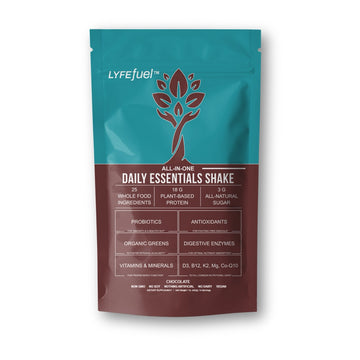
Essentials Shake
Chocolate · 24 servings
★★★★★★★★★★ 4.64 (1593)

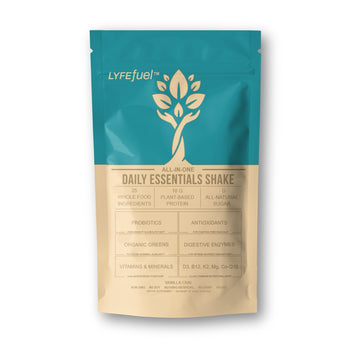
Essentials Shake
Vanilla Chai · 24 servings
★★★★★★★★★★ 4.64 (1593)

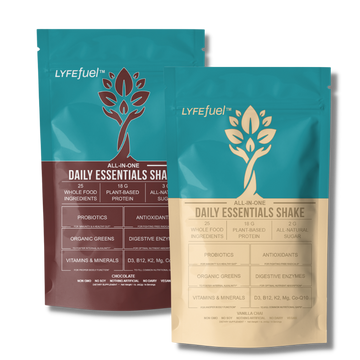
Essentials Bundle
2x Vanilla · free shaker
★★★★★★★★★★ 4.64 (1593)
Key Takeaways
- Protein, calories, fat, sugar and micronutrients are the five numbers that decide whether a shake can stand in for a meal. Check all five, not just protein.
- "Clean" and "natural" are marketing words, not standardized definitions. The ingredient list is the only reliable test.
- Proprietary blends that list ingredients without amounts make it impossible to know how much of anything you are getting.
- Questionable Additives to watch for include maltodextrin as a lead ingredient, carrageenan, heavy gum systems, large doses of sugar alcohols, and artificial colors or sweeteners.
- Synthetic and food-based vitamins can both be absorbed. The more useful question is whether the formula gives you the full range, in forms you can identify.
What makes a meal replacement shake healthy
A meal replacement shake is doing a different job from a protein shake. A protein shake supplements a diet that is already covering everything else. A meal replacement is standing in for breakfast or lunch, so it has to account for the things that meal would have given you: protein, energy, fat, some carbohydrate, and the vitamins and minerals you would have picked up from real food.
That means "healthy" is not one number. A shake can be high in protein and still be a poor meal if it has almost no calories, no fat and a thin micronutrient panel. Another can have a long list of superfoods on the front and a first ingredient of maltodextrin on the back. The useful way to judge a shake is against a short list of criteria, each of which you can check on the Supplement Facts or Nutrition Facts panel and the ingredient list in about five minutes.
Each of those criteria is covered below, followed by a scorecard you can run on any label.
The nutrition numbers to check first
Protein. Protein is the part of a shake that does the most to keep you full, and it is the macronutrient most people under-eat at breakfast. The general adult DRI is 0.8g per kilogram of body weight per day, and active people, older adults and anyone trying to preserve muscle often aim higher. For a single meal, a shake in the high teens to the twenties in grams of protein is a sensible range for most people. Single digits is a snack. For plant protein, look for a pairing such as pea and rice: pea is low in methionine and rice is low in lysine, so together they cover each other's gaps.
Calories. A typical meal for most adults lands somewhere in the several-hundred calorie range. Many shakes, mixed with water, come in well below that. A low calorie base is not a flaw, but it means the shake is a base, not a meal, until you add something to it. Decide what job the shake is doing, a full meal, a light breakfast or a snack, and build up the calories to match.
Fat. Fat slows digestion and helps with fullness, and vitamins A, D, E and K are fat-soluble, meaning they absorb better when some fat is present. A very low fat shake mixed with water is not giving those vitamins much to work with. Nut butter, avocado, chia, hemp seed or a higher fat milk fixes this quickly.
Fiber. Fiber is the number most powders fall short on, because it is bulky, affects texture and is hard to fit into a single scoop. Some formulas add isolated fibers to boost the number. Others keep it low and expect you to pair the shake with fruit, oats, seeds or a high fiber food. Either approach can work, as long as you know which one you are buying. Most adults fall short of recommended daily fiber intake, so this is worth planning for rather than ignoring.
Sugar. Look at total sugars and, separately, at added sugars, which US labels now break out. The Dietary Guidelines for Americans recommend keeping added sugar under 10% of daily calories, and a shake is an easy place for a surprising amount to hide, especially in ready-to-drink bottles. A low single digit sugar number per serving is a reasonable ceiling for a powder. Fruit you blend in yourself is a different matter, since it comes with its own fiber and water.
Vitamins and minerals. A meal replacement should list a broad range of vitamins and minerals by name and amount, not just a handful. Pay particular attention to vitamin D, B12, iron, calcium, magnesium and zinc, which are common shortfall nutrients. If you already take a multivitamin, add up the overlap, since stacking several fortified products can push some nutrients higher than you need.
Ingredient transparency and proprietary blends
The ingredient list tells you more about a shake's quality than any front-of-pack claim. Ingredients are listed in descending order by weight, so the first three or four tell you what the product mostly is. If the first ingredient is a protein, you are looking at a protein-led formula. If it is maltodextrin, sugar or a filler, the shake is mostly carbohydrate with protein added.
The other thing to check is how blends are disclosed. A "proprietary blend" lists a group of ingredients under one combined weight, often with an appealing name, without telling you how much of each is in there. That is legal, and brands often defend it as protecting their formula. The problem for the buyer is that a blend of twelve superfoods at a combined weight of a few hundred milligrams may contain only trace amounts of the ingredients you were paying for. The front of the bag can name them all, and the dose can still be too small to matter.
What good transparency looks like:
- Each functional ingredient is named, ideally with its own amount.
- Probiotics, if present, list the number of strains and a CFU count.
- The protein source is specific, such as "pea protein" or "brown rice protein," rather than "plant protein blend."
- The sweetener is named, so you know whether it is sugar, stevia, monk fruit, sucralose or a sugar alcohol.
- Allergens are clearly stated, including less obvious ones such as wheat from wheatgrass in greens blends, or coconut, which US labels list as a tree nut.
Questionable Additives worth avoiding
Not every additive is a problem, and the dose matters for most of them. But a handful of ingredients show up again and again in lower quality shakes, and they are worth knowing by name so you can decide for yourself.
- Maltodextrin as a lead ingredient. Maltodextrin is a highly processed starch used as a cheap filler and texture agent. In small amounts it is common across packaged foods. As the first or second ingredient in a meal replacement, it usually means you are paying for refined carbohydrate in place of protein and whole food ingredients.
- Carrageenan. A seaweed-derived thickener used for a creamy texture. It is permitted in food, but it has been debated for years and many people who are mindful of digestive comfort prefer to avoid it.
- Heavy gum systems. Xanthan, guar, cellulose and similar gums are used to thicken and stabilize. Small amounts are generally well tolerated. A long list of several gums together is a sign the formula is relying on texture tricks, and some people notice bloating from them.
- Sugar alcohols in large amounts. Erythritol, maltitol, sorbitol and xylitol sweeten without much sugar, but in larger amounts some of them are well known to cause gas and digestive upset, maltitol and sorbitol in particular. Xylitol is also toxic to dogs, which matters if you have one.
- Artificial sweeteners. Sucralose, aspartame and acesulfame potassium are approved for use, but many people looking for a clean shake prefer to avoid them. Plant-derived options such as stevia and monk fruit are the common alternatives, though they still taste sweet and some people notice an aftertaste.
- Artificial colors. Dyes such as Red 40 or Yellow 5 add nothing nutritionally to a powder you are going to blend anyway.
A short ingredient list is not automatically better, and a long one is not automatically worse. A shake with a long list of named whole food ingredients at real doses can be a stronger product than a short list built on filler and sweetener.
What "clean" and "natural" actually mean on a label
Neither word has a precise, enforced definition for supplements and powders. "Clean" has no regulatory definition at all. It is a marketing word that each brand defines for itself, usually meaning some combination of "no artificial sweeteners," "no artificial colors" and "short ingredient list." "Natural" has a long-standing informal FDA position that nothing artificial or synthetic has been added that would not normally be expected in the food, but it is not a formal standard, and it says nothing about how processed an ingredient is or how nutritious the product is.
So a shake can call itself clean while containing a gum system you would rather avoid, or call itself natural while being mostly maltodextrin and natural flavors. The practical approach is to treat "clean" and "natural" as a prompt to check the label, not as a conclusion.
Synthetic versus food-based vitamins, honestly. This is where "natural" marketing gets the most confusing. Most vitamins in most shakes, and in most multivitamins, are synthetic or isolated forms, such as cyanocobalamin for B12, folic acid for folate, ascorbic acid for vitamin C and dl-alpha-tocopheryl acetate for vitamin E. Food-based or food-extracted vitamins come packaged with the other compounds found in the original food.
Both forms can be absorbed and used by the body. Some synthetic forms are well absorbed and widely used for good reason, B12 and folic acid among them. There are real differences between some forms, natural vitamin E (d-alpha) versus synthetic (dl-alpha) being the most commonly cited example. But "synthetic" does not mean useless, and "food-based" does not mean a shake is complete. The more useful questions are whether the panel covers the full range of vitamins and minerals, whether each one is listed by its specific form, and whether the brand is honest about which forms it uses. If you are pregnant, taking medication or managing a diagnosed condition, ask your doctor which forms and doses are right for you.
A healthy shake scorecard
Use this as a quick pass on any label before you buy. A shake does not need a perfect score, but you should know where it falls short and how you plan to cover the gap.
1. Protein is in the high teens or more per serving, from a named source or complementary plant pairing.
2. Calories fit the job, or you have a plan to add calories (fruit, nut butter, oats, milk) if it is replacing a full meal.
3. There is a fat source in the shake, or you add one.
4. Fiber is meaningful, or you pair the shake with a high fiber food.
5. Sugar is in the low single digits per serving, and you know how much is added.
6. A broad vitamin and mineral panel is listed by name and amount.
7. Every blend is disclosed, ideally with individual amounts, and probiotics show a CFU count.
8. The first ingredient is a protein or whole food, not maltodextrin or sugar.
9. No artificial colors, and a sweetener you are comfortable with.
10. Allergens are clearly stated and work for you.
A shake that passes most of these, combined with a sensible add-in, can be a genuinely healthy breakfast or lunch. Even the best one is still a convenience tool, not a replacement for a varied diet with whole vegetables, fruit, legumes and grains across the week. One or two shakes a day alongside real meals is a reasonable ceiling for most people. A shake also only helps with weight goals if it has fewer calories than the meal it replaced; it is not a weight loss product by itself.
How LyfeFuel Essentials measures up on this scorecard
Running our Essentials Nutrition Shake through the same checklist, including the places where it comes up short:
- Protein: 18g per 33g scoop from Canadian yellow pea and organic rice protein, the complementary pairing described above.
- Calories and fat: 110 calories and 2g fat with water. That is a base, not a meal. To replace breakfast or lunch, blend it with fruit and a fat source such as nut butter, avocado or a higher fat milk.
- Fiber: 1g per scoop, which is low. Pair it with fruit, oats or seeds; our bars carry 12g to 14g if you want a grab-and-go pairing.
- Sugar: 3g per scoop. In Chocolate all 3g are added; in Vanilla Chai 1g is added. It is sweetened with stevia leaf extract, and there are no sugar alcohols.
- Vitamins and minerals: 27, each listed by name and amount. The premix uses standard synthetic forms, which is normal for the category. We are not going to call them whole-food sourced. Rebuilding that premix is the focus of our next formulation.
- Transparency: the whole food base is named with amounts, including a Super Berry Blend at 170mg, organic greens, spirulina at 250mg, flax at 1,000mg, grape seed and pomegranate at 350mg each, a 5-strain probiotic at 960M CFU and a digestive enzyme blend.
- Questionable Additives: no artificial sweeteners and no sugar alcohols on the label.
- Allergens: no dairy and no soy. It does contain tree nuts (coconut) and wheat, which comes from the wheatgrass in the greens blend.
Frequently asked questions
What is the healthiest meal replacement shake?
There is no single healthiest shake for everyone. The best option for you has enough protein to keep you full, calories that fit how you use it, low added sugar, a full vitamin and mineral panel, named ingredients with amounts, and few Questionable Additives. Use the scorecard above to compare labels directly.
How much protein should a healthy meal replacement shake have?
For a shake standing in for a meal, protein in the high teens to the twenties in grams per serving is a sensible range for most adults. Your total daily need depends on body weight, age and activity, so a dietitian can help if you want a personal number.
What does "clean" mean on a meal replacement shake?
Nothing official. "Clean" has no regulatory definition, so each brand decides what it means. Read the ingredient list and check for maltodextrin, carrageenan, heavy gum systems, sugar alcohols, and artificial sweeteners or colors.
Are natural meal replacement shakes better than ones with synthetic vitamins?
Not automatically. Both synthetic and food-based vitamins can be absorbed, and some synthetic forms are well absorbed. What matters more is whether the shake covers the full range of nutrients, lists each form clearly, and is honest about where its vitamins come from.
Can I drink a meal replacement shake every day?
Many people use one daily, often for breakfast or lunch, as part of a varied diet. One or two shakes a day alongside real meals is a reasonable ceiling for most people. If you are pregnant, on medication or managing a health condition, check with your doctor first.
Why am I still hungry after a meal replacement shake?
Usually because the shake is low in calories, fat or fiber for the meal it replaced. Add fruit, oats, nut butter, seeds or milk to bring it closer to a real meal.
Are meal replacement shakes good for weight loss?
A shake only creates a calorie deficit if it has fewer calories than the meal it replaces. It is a convenience tool, not a weight loss product by itself, and it still needs to keep you full enough that you do not make up the difference later.
Related guides
- Best meal substitute shakes
- Dairy free meal replacement shakes
- High protein meal replacement
- Lactose free meal replacement shakes
- Low calorie meal replacement shakes
- Low carb protein powder
- Low sugar meal replacement
- Meal replacement protein powder
- Meal replacement shakes for breakfast
- Meal replacement shakes for seniors
- Meal replacement shakes for women
- Meal substitute powder
- Nutritional meal replacement shakes
- Plant based meal replacement shakes
- Plant based protein shakes
- Protein powder for men
- Protein powder with probiotics
- Protein shakes without artificial sweeteners
- Vegan meal replacement