Low Calorie Meal Replacement Shakes: How Low Is Too Low
A low calorie meal replacement shake usually means a powder or ready-to-drink shake in the 100 to 250 calorie range, compared with the 300 to 400 calories a fuller meal replacement typically carries on its label. The best ones pack a lot of protein into those calories, and the smart way to use them is as a base you build up to meal size, not as a meal on its own.
Shop the Essentials range
View all products →
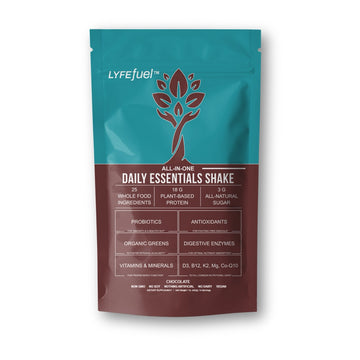
Essentials Shake
Chocolate · 24 servings
★★★★★★★★★★ 4.63 (1574)

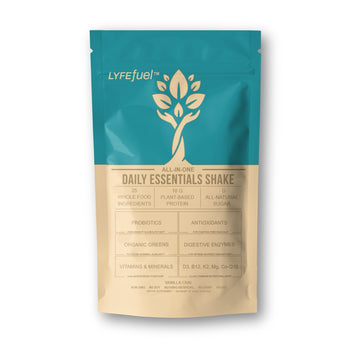
Essentials Shake
Vanilla Chai · 24 servings
★★★★★★★★★★ 4.63 (1574)

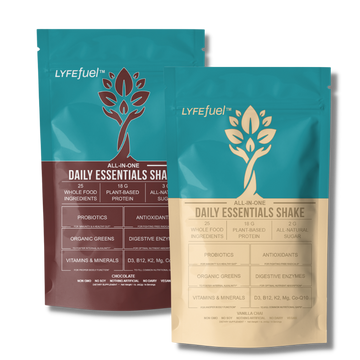
Essentials Bundle
2x Vanilla · free shaker
★★★★★★★★★★ 4.63 (1574)
Key Takeaways
- Typical labels put low calorie shakes around 100 to 250 calories and fuller meal replacements around 300 to 400. Below the lower range, you are drinking a snack.
- Protein per calorie is the single most useful number on the label. Divide grams of protein by calories to compare shakes fairly.
- Fullness comes from protein, fiber, volume and some fat. A shake that is low in all four will leave you hungry fast.
- A low calorie base plus fruit, nut butter or milk gives you control over the final number, which is more flexible than a fixed high-calorie formula.
- Very low calorie eating plans need medical supervision. Do not replace every meal with shakes, and remember that body weight follows total intake, not any single product.
What counts as a low calorie meal replacement shake
"Low calorie" is a defined claim on regular food labels (40 calories or less per serving), but no shake that calls itself a low calorie meal replacement comes close to that, so on these products the phrase is a marketing description, not a standard. In practice, the products that use it fall into a fairly predictable band.
Low calorie shakes, typically 100 to 250 calories per serving. These are usually protein-forward powders mixed with water, or lighter ready-to-drink bottles. Most of the calories come from protein, with small amounts of carbohydrate and fat.
Fuller meal replacements, typically 300 to 400 calories per serving. These are formulated to stand in for a meal as-is. They carry more carbohydrate and fat alongside the protein, and sometimes more fiber, which is what gets them to a meal-sized number.
Protein shakes, often overlapping the low end. A plain protein powder can look almost identical to a low calorie meal replacement on calories. The difference is usually the micronutrient premix, the extra ingredients beyond protein, and how the brand positions it.
The easiest way to place any shake is to compare it with what you would actually eat at that meal. A modest breakfast of eggs and toast, or yogurt with fruit and nuts, often lands somewhere around 300 to 500 calories. A 120 calorie shake is a much smaller meal than that, which can be the point if you want a lighter option, but it changes how you should expect to feel two hours later.
The trade-off: when low calorie becomes a snack
The appeal of a low calorie shake is obvious. It is quick, it is portion-controlled, and it takes the guesswork out of a meal. The catch is that calories are also energy, and a meal that is too small for your needs tends to get "repaid" later through snacking or a larger next meal.
A few signs a shake is too light to function as a meal for you:
- You are hungry again within an hour or two.
- You find yourself grazing mid-morning or mid-afternoon on whatever is nearby.
- Your energy dips noticeably before the next meal.
- You eat noticeably more at dinner on shake days than on days you eat a regular breakfast or lunch.
None of that means the shake is a bad product. It means it is being asked to do a job it was not sized for. A 110 to 150 calorie shake is a very good snack, a very good post-workout protein hit, or a very good foundation for a meal. As a complete meal with nothing added, it is small for most adults.
This matters because the reason most people look for low calorie shakes is to manage total intake. If a shake that saves calories at breakfast leads to extra eating later, the net effect can be zero or worse. The goal is the lowest calorie option that still keeps you full until your next planned meal, which is a different number for a smaller, less active person than for a larger, more active one.
Protein per calorie is the metric that matters
If you only compare one number between low calorie shakes, make it protein relative to calories. Calories alone tell you how much energy a serving carries. Protein per calorie tells you how much of that energy is coming from the macronutrient most associated with fullness and with keeping muscle as part of a balanced diet.
The math is simple. Divide grams of protein by calories, then multiply by 100 to get grams of protein per 100 calories.
1. A shake with 20g protein and 200 calories gives you 10g protein per 100 calories.
2. A shake with 15g protein and 250 calories gives you 6g protein per 100 calories.
3. A shake with 18g protein and 110 calories gives you about 16g protein per 100 calories.
Protein provides about 4 calories per gram, so a shake where protein supplies most of the calories will score high, while one padded with sugars or starches will score low. As a rough guide, anything around 10g of protein per 100 calories or better is protein-dense, and very lean protein isolates can climb well above that.
Two cautions keep this metric honest. First, a very high ratio means the shake is mostly protein, which is exactly why it is low in calories, and also why it usually needs carbohydrate and fat added to become a meal. Second, protein quality matters as well as quantity. Animal proteins and soy are complete on their own, while plant blends need sensible pairings, such as pea, which is low in methionine, with rice, which is low in lysine, so that each covers the other's gap.
For context on how much protein you need overall, the general dietary reference intake for adults is 0.8g per kilogram of body weight per day, with many active people aiming higher. A shake does not need to hit your whole target. It needs to contribute a meaningful share of it for the calories it costs.
What actually keeps you full on fewer calories
Satiety, the feeling of being full and staying full, does not come from calories alone. Four levers do most of the work, and a good low calorie shake, or a good way of using one, pulls on as many as possible.
Protein. Gram for gram, protein is generally considered the most satiating macronutrient. This is the main reason protein-dense shakes outperform sugary ones at the same calorie level.
Fiber. Fiber slows digestion and adds bulk. Many low calorie shakes carry very little of it, because fiber can thicken a powder and affect texture. Adding a high-fiber food alongside the shake, such as berries, a spoon of chia or ground flax, or a piece of whole fruit, is one of the cheapest ways to make the same calories last longer.
Volume. A larger drink takes up more space and takes longer to finish. Blending a shake with ice, frozen fruit or extra liquid increases volume without adding many calories. Drinking slowly helps as well, since fullness signals take time to register.
Fat. Fat slows stomach emptying and makes a meal feel more substantial. Fat-free shakes are lower in calories, but a little fat often pays for itself in staying power. Fat is also needed to absorb vitamins A, D, E and K, which matters when the shake carries a vitamin premix.
Texture and chewing play a smaller role too. Liquid calories tend to feel less filling than the same calories eaten as solid food, which is one more reason a very low calorie drink can leave you looking for something to chew soon after.
How to build a low calorie base into a real meal
The practical advantage of a low calorie shake is control. Starting from a lean, protein-dense base lets you add exactly the calories you want, from foods you choose, instead of accepting whatever carbohydrate and fat a fixed formula includes. Approximate values for common add-ins:
Liquid choice. Water adds nothing. Unsweetened almond milk adds very little, often around 30 to 40 calories a cup. Soy milk adds more calories and some extra protein. Dairy milk and oat milk add more again, often in the 100 to 150 calorie range per cup depending on type. Switching liquid is the simplest way to move a shake from snack size toward meal size.
Fruit. Half to one banana, or a cup of frozen berries, adds natural carbohydrate, some fiber and a lot of volume. A medium banana is roughly 100 calories, and berries come in lower per cup.
Healthy fat. A tablespoon of peanut or almond butter adds roughly 90 to 100 calories, mostly from fat, plus a little protein. A tablespoon of ground flax or chia adds fat and fiber. A quarter of an avocado makes a shake creamier for a similar calorie cost.
Oats or greens. A couple of tablespoons of rolled oats adds slower-digesting carbohydrate and fiber. A handful of spinach adds volume for almost no calories and blends in with chocolate flavors.
A sample build: a 110 calorie protein base, a cup of unsweetened almond milk, half a banana and a tablespoon of nut butter lands somewhere around 300 calories, with a meal-like balance of protein, carbohydrate and fat. That is a real breakfast. The same base with water alone is a snack, and there is nothing wrong with that as long as you use it as one.
Using low calorie shakes safely
Low calorie shakes are a convenience tool, and like any tool they work best within limits.
Very low calorie diets need medical supervision. Plans that bring total intake down to very low levels, commonly described as roughly 800 calories a day or less, are typically done only under a doctor's care. Do not build one yourself out of shakes.
Do not replace every meal. Replacing one meal a day, or occasionally two, is a common way to use shakes. Replacing all of them removes the variety of whole foods, fiber and food structure that a single formula cannot reproduce, and it is hard to sustain.
Calories change body weight only through total intake. A shake helps manage intake only if it has fewer calories than what it replaces and does not lead to extra eating later. No shake causes weight change on its own, and no shake should promise to.
Check with a doctor first if it applies to you. If you are pregnant or breastfeeding, managing a medical condition such as diabetes or kidney disease, taking medication, or have a history of disordered eating, talk to your doctor or a registered dietitian before changing how you eat.
How LyfeFuel Essentials measures up on these criteria
Measured against the criteria above, plainly, including the numbers that are modest:
- Calories and protein: 110 calories and 18g protein per scoop mixed with water, about 16g protein per 100 calories. That is strong protein density, and it is also why we call it a base, not a full meal. With water alone it is snack-sized.
- Fat: 2g. Lean, which keeps calories low, but it means you should add a fat source such as nut butter, flax or milk for staying power and to help absorb the fat-soluble vitamins.
- Fiber: 1g per scoop, which is low. Add fruit, oats or chia. If you want a fiber-dense pairing, our bars carry 12g to 14g.
- Protein quality: Canadian yellow pea plus organic rice protein, the complementary pairing that covers each source's amino acid gap. No dairy, no soy.
- Sugar and sweetener: 3g sugar per scoop. In Chocolate, all 3g are added; Vanilla Chai has 1g added. Both flavors are sweetened with stevia leaf extract, so this is not a stevia-free shake.
- Whole food base: named, panel-verifiable ingredients including spirulina, flax, an organic greens blend, a berry blend, pomegranate, grape seed, a 5-strain probiotic blend and digestive enzymes.
- Vitamins: 27 vitamins and minerals, each listed by amount. The premix is a standard synthetic one, normal for the category, and it is what our next formulation is rebuilding. We will not call it food-sourced before that ships.
- Allergens: contains tree nuts (coconut) and wheat, from wheatgrass in the greens blend.
Best use: build it with milk, fruit and nut butter for a meal, or drink it with water as a high-protein snack.
Frequently asked questions
How many calories should a meal replacement shake have?
Fuller meal replacements typically list around 300 to 400 calories per serving, while low calorie shakes often sit around 100 to 250. If your shake is at the low end, treat it as a base and add fruit, milk or a fat source to bring it to meal size.
Is a 100 calorie shake enough for a meal?
For most adults, no. A shake that small works well as a snack or protein top-up, but it is likely to leave you hungry well before your next meal unless you add calories from whole foods.
What is a good protein to calorie ratio in a shake?
Divide protein grams by calories and multiply by 100. Around 10g of protein per 100 calories or better is protein-dense. A very high ratio usually means the shake is mostly protein and will need carbohydrate and fat added to become a meal.
How do I make a low calorie shake more filling?
Add fiber and volume with berries, banana, oats, chia or spinach, blend with ice, and include a little fat such as nut butter or flax. Drinking it slowly also gives fullness signals time to catch up.
Can I replace all my meals with low calorie shakes?
That is not recommended. Replacing one meal a day is a common approach. Very low calorie plans should only be followed under medical supervision, and whole foods provide fiber and variety a single formula cannot.
Will low calorie meal replacement shakes help me lose weight?
A shake only reduces your total intake if it has fewer calories than what it replaced and does not lead to extra eating later. Weight change depends on your overall diet and activity, not on any one product. For personal guidance, talk to your doctor or a registered dietitian.
Is water or milk better for mixing a low calorie shake?
Water keeps calories lowest and suits a snack. Milk, whether dairy or plant-based, adds calories, and some types add protein and fat, which makes the shake more filling and closer to a real meal.
Related guides
- Best meal substitute shakes
- Dairy free meal replacement shakes
- Healthy meal replacement shakes
- High protein meal replacement
- Lactose free meal replacement shakes
- Low sugar meal replacement
- Meal replacement protein powder
- Meal replacement shakes for breakfast
- Meal replacement shakes for seniors
- Meal replacement shakes for women
- Meal substitute powder
- Nutritional meal replacement shakes
- Plant based meal replacement shakes
- Protein shakes without artificial sweeteners
- Vegan meal replacement