| Large Waist Size
So, what explains this paradox?
Some people argue we’ve reversed cause and effect.
Overeating isn’t the primary cause of obesity. The process of gaining weight causes us to overeat.
Are Carbs The Real Problem?
If not the energy balance, then what causes obesity? This is where the carbohydrate-insulin model comes in.
The carbohydrate-insulin model focuses on the processed carbs that have flooded modern diets. These carbs (like white bread, white rice, sugary foods) raise insulin levels too high and produce other hormonal changes which program our body to store extra fat.
From this perspective, obesity is a calorie distribution problem.
Too many calories going into fat tissue and too few in the blood to satisfy the energy needs of the body. So our brain makes us feel hungrier, to compensate for the lack of energy.
If we try to ignore hunger and restrict calories, the body conserves energy by slowing metabolism.
Simply cutting back calories doesn’t work because it doesn’t solve the underlying problem — a predisposition to store excessive fat.
Instead, by reducing the surge of blood glucose and insulin after meals, fat tissue can be forced to release the pent-up calories, leading to less hunger.
This can be done with a high-fat diet low in processed carbs, that can include unprocessed carbs like non-starchy vegetables, whole fruits, legumes, and whole grains.
The energy balance model contributes to stereotypes by blaming overeating on poor self-control.
If the carbohydrate-insulin model is correct, then deeply ingrained notions about obesity are simply wrong.
Overeating is a symptom, not a cause.
What Makes A Good Meal Replacement Shake?
Now that we’ve cleared up a few misconceptions about how weight loss really works, you should be better equipped to make decisions about which meal replacement shake is the best for your goals.
Nutrition labels are impossible to understand and often don’t reveal all the “hidden” yet important information required to make a good decision. We've simplified things to just a few categories that we believe to be the most important when comparing brands.
A Complete Shake vs Shakes With Junk
The reason most people look for a “complete” meal replacement shake in the first place is because they crave nutrients. Nutrients they may miss out on if they simply skip a meal and nutrients that are disappearing from modern diets.
If you’re trying to lose weight then you want to be in a calorie deficit, however, the composition of the “food” you eat might be the thing holding you back from reaching your goals.
Whether you believe in the energy balance model or the carbohydrate-insulin model, one thing is clear.
The main purpose of using meal replacement shakes should be to get “complete” nutrition while helping us lose weight. A low calorie, low nutrient, high carb approach is a surefire way to sabotage your success. See how to spot genuinely complete nutritional shakes on the label.
Without the right vitamin & mineral balance, the body thinks it’s in starvation mode, causing it to burn lean muscle instead of fat stores.
When your body goes into starvation mode, the body’s natural reaction is to hold onto body fat. That’s because the energy we get from fat is more than 2x what we get from carbohydrates.
This is simply part of our evolutionary biology.
A better solution? Complete nutrition that is high in nutrients but low in calories and carbohydrates.
So, what do we need for a complete nutrition shake?
-
The first thing we need is protein. Protein is great for building muscle, and for repairing/regeneration of your body. Plus protein has high satiety and high thermic effect.
-
The second thing we need are micronutrients. We need vitamins and minerals for various processes in our body because micronutrient deficiencies can have huge ramifications on the body.
And that’s it.
Well, mostly.
So the question remains, is drinking a meal replacement shake high in carbohydrates the best idea?
Chances are you’re already getting enough carbs.
On top of that, when you consider the ways in which most people prepare and use nutritional powders, the last thing you’d want is a product already high in carbohydrates because it gives you no flexibility.
Take all the recipes online for smoothies and smoothie bowls as an example.
By conventional meal replacement standards, there’s no way you’d be able to keep carbs to a minimum using most meal replacement powders.
That’s another benefit of the Essentials Shake — you can add as many carbs or fats as you want without exceeding your macro targets for the meal. Need more carbs? Add some bananas. Need more fat? Add some flaxseeds, avocado, or MCT oil.
What you can’t do however, is remove carbs and fat that’s already in the meal replacement powder.
Bottom Line
A good meal replacement shake should have:
- High in protein (18-25 grams)
- Low in net carbs and sugar (under 5 grams)
- All essential micronutrients in proper dosage
- A small amount of healthy fats
- No fillers, preservatives, or additives
- No synthetic ingredients
Meal Replacement Shakes For Diabetics
Diabetes is a condition where a person has excess glucose in their bloodstream. This is either due to their pancreas not making enough insulin or their cells are not responding to the insulin.
Which means that diabetics need to control their glucose levels at all times. And the best way to do that is to track your carbohydrate intake.
This is where meal replacement shakes come in.
Most meal replacement shakes are relatively low in carbs and high in protein to help maintain glucose levels and control your calorie intake.
But here’s the problem:
Though these shakes claim to be low in sugar, they actually have too many carbs and hidden sugars in them. Let us explain.
Too Many Carbs & Sugars
A lot of meal replacement shakes on the market go wrong when it comes to carbs and sugar.
1. There are so many brands that have 40+ grams of carbs with 10+ grams of sugar.
Unless you're an elite athlete, you don’t need all these simple carbs in your diet. In fact, overconsumption of simple carbohydrates and sugar will put you on a fast track for insulin resistance and diabetes.
It’s mind numbing to see how many brands overlook this.
The problem of modern lifestyles isn’t a lack of calories and simple carbohydrates. In fact it’s the exact opposite. We’re getting way too much of these things in the diet already!
That’s why diabetics in need of a product to help control blood sugar levels throughout the day should be looking for meal replacement shakes that are low in carbs and sugar.
2. Another problem diabetics deal with are the hidden carbs and sugars.
One of the most common food additives that are found in meal replacement shakes is corn and soy maltodextrin — a starchy white powder that many manufacturers use to improve a food’s appearance, texture, and shelf life.
To turn superfoods into a powdered format and make them easily dispersible in water, some form of maltodextrin is typically required. Most manufacturers opt to use corn or soy because it's cheaper and more common. At LyfeFuel, we try to avoid it whenever possible but always opt for tapioca instead for the following reasons:
- Harnessing the power of tapioca, our ingredients undergo minimal processing compared to its corn counterpart, ensuring a more natural and wholesome option.
- Say goodbye to GMO concerns with our tapioca-based product, as it proudly boasts a GMO-free composition, setting it apart from corn and soy-based alternatives.
- Tapioca naturally offers lower sodium levels and higher concentrations of potassium, contributing to a well-balanced and nutritious choice.
- Tapioca offers the advantage of reduced short-chain sugar content while reveling in a significantly higher proportion of polysaccharides, providing a truly "complex" complex carbohydrate for enhanced nutritional value with less impact on blood glucose levels.
Corn and soy-based maltodextrins have been linked to high cholesterol, type 2 diabetes, and weight gain.
The problem with supplements is that it’s not required for a company to disclose this information on their product label unless it's a primary ingredient.
The problem with maltodextrin in general is that it isn't well understood by consumers, meaning that some companies will add it to their products as a sweetening agent without disclosing how much is being used, which could be problematic because the body treats it just like normal table sugar.
At LyfeFuel, we never use maltodextrin as a primary ingredient, rather it is only used as a carrier ingredient for some superfoods when converting them to powders, making them easier to blend and eliminate clumping.
Another problem is that most meal replacement shake manufacturers will also use sugar alcohols like xylitol, erythritol, and allulose to make their products appear to be healthier than they really are and labeled as “sugar free”.
Research has found that many of these synthetic sugar replacers can be counterproductive to weight loss because they actually disrupt the healthy microorganisms in your gut — an essential component to all aspects of health.
The Smoothie Bowl Problem for Diabetics
If you’re a smoothie lover (like me) there’s another huge problem you need to consider when it comes to meal replacement shakes, which is the taste, mixability, and fullness factor.
The reality is that most meal replacement shakes don’t taste great.
The ones that do typically contain a ton of carbs and sugars because that’s what gives them their sweet taste. Which means that most people use the powder to create a more robust and better tasting breakfast smoothie or bowl.
However, if you’re using a typical meal replacement powder that is high in calories and carbs to create a smoothie recipe for your shake, you won’t be very successful with your weight loss goals.
This is because most meal replacement shakes are already very high in calories and in carbs/sugars. So, when you add oat milk, nut butter, and berries to your shake, you make the shake incredibly calorie dense.
This is a great option if you’re looking for a meal replacement shake to gain weight but not so great when you want to lose weight.
Want to customize your shake for more flavor or fullness? Here’s how to build the perfect LyfeFuel smoothie based on your health goals.
How can you lose weight if your smoothie bowl is 900 calories?
One solution is to simply never add anything to your shake.
But that means you better LOVE the taste and texture of whatever product you choose. It also needs to be free of artificial sweeteners and hidden chemical additives that actually cause the body to hold onto weight.
For anyone that’s done a decent amount of research into these products, there’s not a lot out there that actually meet the criteria above.
But all is not lost.
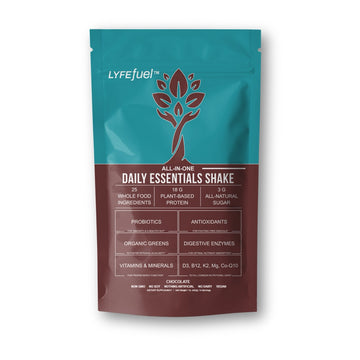
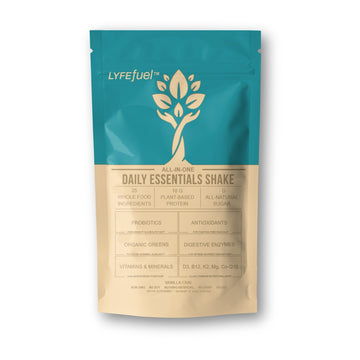
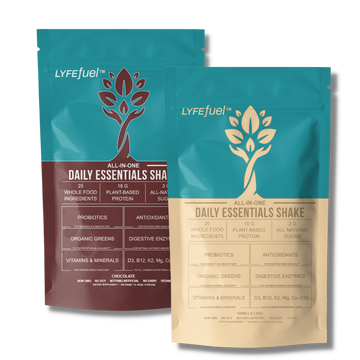
Our recommendation is to choose a meal replacement shake that’s low in calories and sugar like our Essentials Shake.
Now, obviously we’re biased, but can you really blame us?
When you do the side-by-side comparison you’ll see that nothing else compares to what the Essentials Shake provides.
And that’s because we chose a different path based on real nutritional research, not just the idea that more of something is automatically better.
Competitor Comparison
As we’ve pointed out… more carbs, more sugar, more calories, and sneaky ingredients that can spike blood sugar are are the last thing you need when it comes to enhancing your health.
The best part about using a low carb and low calorie option is that when you’re in the mood for something different, you can easily change the flavor and texture by creating a smoothie with a lot of fruit, plant-based milk, and nut butters and still lose weight, whereas other options would put you at almost 1,000 calories due to all the added sugar and carbs in their powders on top of whatever else you choose to mix it with!
With the Essentials Shake, your total calories will likely be well under 500 kcal, helping you achieve the caloric deficit you’re after while still leaving plenty of room for eating whole food meals, not just guzzling all your meals in liquid form.
Meal Replacement Shakes For Weight Gain: The Better Choice?
If you’re trying to gain weight, and simply using the net-calorie surplus way of eating to get you there, then all meal replacement shakes are decent options.
That’s because most meal replacement shakes are high in protein, calories, and carbs and loaded with artificial ingredients and synthetic vitamins.
Everything you need to increase your weight.
The question remains, what type of weight are you looking to gain?
If your goal is to put on lean muscle mass, you’ll want to eat as clean as possible to avoid adding excess body fat.
That’s why when choosing a meal replacement shake for weight gain, it’s important to look beyond the calories and macronutrients and instead focus on the quality of ingredients.
You’re better off choosing a meal replacement powder with slightly lower calories but high quality nutrients because you can easily add milk, fruit, and fats to increase the caloric density of the shake.
Following this advice will ensure you gain the right type of weight and not simply pack on pounds of body fat
Why LyfeFuel Might Be Bad For Weight Gain
It might sound weird coming from us, but you can’t use LyfeFuel on its own to gain weight easily.
Sure, you’re getting enough protein and micronutrients, but you’re not getting enough calories living off shakes alone.
And coming from the perspective of a professional athlete — who literally had to consume massive amounts of calories — I understand how difficult it can be to meet your calorie needs when trying to gain weight.
So, I know how important liquid meals can be.
Just remember that it’s easier to add to your shake and customize it to your specific needs but impossible to remove bad ingredients and junk calories that are already in the powder itself.
So, if you’re trying to gain weight (muscle) while using LyfeFuel, make a delicious smoothie or bowl from one of our recipes – like the Mango Smoothie or the Banana Oat Bowl.
For packing on muscle and achieving peak performance, check out our Recovery Shake – a complete protein and superfood mix designed for athletes and more active individuals.
LyfeFuel’s Approach To Nutritionally Complete Shakes
Now, coming back to the crux of this article.
As we explained above, you want calories low and protein/micronutrients high.
Most meal replacement shakes are not doing this. They are high in calories and low in micronutrients or alternatively give you a cookie cutter formula of 33% of everything which won’t help to replenish the most important nutrients missing from modern diets.
So, let’s look at how we do things differently at LyfeFuel.
1. More Nutrient Dense Than Other Shakes
Nutrient Density is defined as the concentration of micronutrients (vitamins & minerals) in a given amount of food relative to the calories it contains.
Everyone knows that we should be eating more nutrient dense foods such as fruits and leafy vegetables but it’s not always easy or convenient to get these foods in modern diets. Not only that, but as we mentioned earlier, the fruits and vegetables you find at your local supermarket are not as nutrient dense as they used to be.
So, if we know we should be eating more whole fruits and vegetables for better health and optimal nutrition, why don’t we apply this same principle to meal replacement shakes?
Using this rationale, the best meal replacement shake would be the one that has the most micronutrients with the fewest amount of calories.
There is one problem with this however.
By this logic, the most nutrient dense food on the planet is a multivitamin. All micronutrients with zero calories.
But a multivitamin is not food. It’s not filling or satisfying.
And organic greens powders suffer from the same problem.
This is where protein comes in.
Protein is essential for our bodies and it is highly satiating. This means that it will keep you fuller for longer compared to carbohydrates. Another benefit of protein is the thermic effect that we discussed earlier. Which means you can eat more protein while not gaining much weight and even losing weight.
This is why LyfeFuel has 18g of complete protein along with all the essential micronutrients with just the right amount of calories.
So, if someone asks which is the most nutrient dense meal replacement shake in the market, then you know the answer.
2. Real Whole Foods Instead Of Synthetic Chemicals
Most meal replacement shakes use synthetic chemicals for their vitamins.
They’ll use compounds like Retinyl Acetate, Thiamin, Riboflavin, Niacinamide etc which are synthetic forms of vitamins A, B2, B3, B1.
These compounds are similar to micronutrients we get from foods like carrots, spinach, broccoli etc but they are made in a lab. This comes with significant disadvantages.
These synthetic compounds are fat soluble, and less bioavailable than their natural forms. Plus when you eat real food, you get enzymes that help you absorb nutrients better.
But LyfeFuel exclusively uses whole foods as a source of micronutrients. We use powdered forms of superfoods that allow you to get the micronutrients you need in the most natural form possible (for a meal replacement shake).
3. Designed to Fill the Gaps of Modern Diets
There are a few problems we need to discuss when it comes to meal replacement shakes and our diets.
This problem has become so common that the vast majority of Americans experience some form of vitamin deficiency or insufficiency.
The good news is, that based on the massive amounts of nutritional data collected from academic institutions we know exactly which nutrients are the most at risk in modern diets.
The problem with most meal replacement shakes is that they aren’t actually designed to compliment your diet from a micronutrient standpoint. Providing 10–30% of nutrients that you’re already getting in adequate amounts from food isn’t enough.
What the body needs is high amounts of the hard-to-get nutrients to restore metabolic function and enable the body to function optimally, which it simply cannot do when nutrition is lacking.
That’s why we designed LyfeFuel to fill the gaps of modern diets by giving you adequate amounts of micronutrients in the most natural form possible.
4. Diet Agnostic (Flexibility based on your goals)
LyfeFuel was designed to fit in just about any diet, except for maybe the carnivore diet.
It can most certainly be a powerful nutritional tool to support your overall wellness and compliment your diet.
That said, we don’t like the word diet because of what it has come to represent in modern society. These days you can put diet right up there with politics and religion… nobody can seem to agree on anything!
Let’s face it. The perfect diet doesn’t exist.
What works for one person can be wildly different than what works for another. It would be foolish and irresponsible for us to assume that the Essentials Shake is the perfect fit for everyone… it’s not. However, there is one underlying principle that should never be ignored.
And that’s food quality.
The highest quality foods are the ones found in nature, not synthetically created in a lab.
Following a diet that is rich in plant-based whole foods while avoiding chemicals, preservatives, and artificial ingredients is the best way to live a long and healthy life.
Whether you’re vegan, pescatarian, low carb, keto, or more of a locavore like me, LyfeFuel was created to support your health while giving you the essential nutrients you need to “Live Your Fullest Everyday” — something that we can all benefit from.
This is because we focus on creating optimal nutrition from real food using whole food synergy to deliver the protein and micronutrients you need rather than just carbs and fat that most of us get plenty of already.
LyfeFuel was developed to fit into your lifestyle rather than you trying to fit into ours. If you’re vegan, you can use nut milk. If you’re keto, you can add MCT oil. If you want to lose weight, use water. If you want to gain weight, make a smoothie.
Health is a lifelong journey and we’re here to support you every step of the way… one that is uniquely your own. Whether you’re a professional athlete training for your quest for gold or just trying to get back to feeling and looking great, we’ve got you covered.
It all starts with the quality of the fuel you put in your body and making a conscious choice about where your food and ingredients come from. Because it matters.
FAQs
Also Read:
References:
|