Best Shakeology Alternative in 2026: LyfeFuel Compared
Chris ManderinoUpdated September 2026. Nutrition figures below are transcribed from each brand's current published supplement facts panel.
Short Answer
The best Shakeology alternative depends on what you want fixed. If your issue is the MLM sales model, the proprietary blends, or the added sugar, LyfeFuel Essentials is the closest direct replacement: 18g of plant protein and 110 calories per serving with a fully itemized label, sold direct. If you want maximum protein and fiber per scoop, Huel Black beats both of us.
Shakeology vs LyfeFuel at a Glance
| Per serving | Shakeology (vegan) | LyfeFuel Essentials |
|---|---|---|
| Protein | 16g | 18g |
| Fiber | 7g | 1g |
| Calories | 140 | 110 |
| Added sugar | 5g (of 7g total sugars) | 3g (organic coconut sugar) |
| Label | Proprietary blends, amounts not itemized | Every ingredient listed individually |
| Sold through | BODi coach network (MLM) | Direct to consumer |
Shakeology genuinely wins on fiber, at 7g against our 1g, and it gives you 30 servings per bag against our 24. Those are real advantages and worth knowing before you switch. Where we differ is the label and the way it reaches you.
As one of the original names in the meal replacement category, Shakeology is well known in the health and fitness world. It is usually paired with structured workout programs and sold as a superfood meal replacement shake, combining protein, adaptogens, digestive enzymes and a vitamin and mineral panel in one scoop.
Plenty of people still go looking for Shakeology alternatives. The reasons that come up most often are the multi-level marketing sales model, the proprietary blends that group ingredients without naming individual amounts, and the added sugar in several flavors. This article covers why people switch, how to judge a replacement, and how LyfeFuel compares on ingredients, nutrition and label transparency.
For comparisons beyond Shakeology, see our breakdowns of Huel alternatives and Soylent alternatives.
Why People Look for a Shakeology Alternative
Shakeology has a loyal following, but it is not the right fit for everyone.
The business model is the most common sticking point. Shakeology is sold through the BODi coach network, a multi-level marketing structure. Buying from a coach who earns on the sale can feel more like a sales pitch than nutrition advice, and a lot of people simply prefer buying direct from the brand that makes the product.
Added sugar is the second. Shakeology vegan flavors carry 7g of total sugars including 5g of added sugar per serving. That is not extreme, but if you are keeping added sugar low it is worth comparing against alternatives that come in lower.
Label transparency is the third. Shakeology groups much of its formula into proprietary blends, so you can see the ingredient names but not how much of each you are getting. For anyone who reads labels closely, that makes the formula hard to evaluate against anything else.
For people who want a whole-food-first formula with every amount disclosed, it makes sense to look at alternatives to Shakeology. For more on the category, see our take on whether meal replacement shakes actually work.
How to Choose the Right Shakeology Alternative
Finding the right alternative to Shakeology comes down to what the shake actually has to do for you.
Start with the job. If the shake is replacing a meal, protein and calories matter most, and anything under about 10g of protein is a supplement rather than a meal. If it is sitting alongside meals, a lower-calorie formula makes more sense.
Then protein quality. Look for complete plant-based protein sources such as organic pea and rice, which together deliver a full amino acid profile.
Check whether the label itemizes amounts. A formula that names 80 superfoods inside a proprietary blend tells you nothing about doses. An itemized panel lets you compare like for like.
Look at added sugar specifically, not total sugars, and at fiber, which varies enormously across this category. And check the servings per container, because a lower shelf price on a smaller bag is not the saving it looks like.
For more on evaluating formulas, read how to choose the right protein powder for your diet.
Shakeology vs. LyfeFuel: Full Comparison
Comparing Shakeology to LyfeFuel Essentials comes down to label transparency, sugar, calorie density and how the product is sold. Here is how they stack up.
| Feature | Shakeology (vegan) | LyfeFuel Essentials |
|---|---|---|
| Protein source | Whey (original) or plant blend (vegan flavors) | Pea + organic rice protein (complete) |
| Protein | 16g | 18g |
| Fiber | 7g | 1g |
| Total sugars / added | 7g / 5g added | 3g / 3g added (organic coconut sugar) |
| Calories | 140 | 110 |
| Superfoods | Grouped in proprietary blends | Named individually with amounts |
| Vitamins & minerals | Included, blended | 27 essential vitamins and minerals, in forms your body recognizes and absorbs |
| Servings per container | 30 | 24 |
| Transparency | Proprietary blends | Open label |
| Business model | MLM coach network | Direct to consumer |
Read that table honestly and it is a trade. Shakeology gives you more fiber and more servings per bag. LyfeFuel gives you more protein in fewer calories, less added sugar, an itemized label and no coach in the middle. If fiber is the single thing you care about, Shakeology wins that row outright.
Shakeology Competitors Compared
Shakeology does not exist in a vacuum. If you are searching for Shakeology competitors, a Shakeology equivalent, or simply a substitute you can buy without joining a coach network, these are the products that come up most often. Every figure below is per serving, taken from each brand's current published panel.
| Per serving | LyfeFuel Essentials | Shakeology (vegan) | Ka'Chava | Huel Black | Grüns |
|---|---|---|---|---|---|
| Protein | 18g | 16g | 25g | 40g | 0g |
| Fiber | 1g | 7g | 6g | 11g | 6g |
| Calories | 110 | 140 | 240 | 400 | 50 |
| Servings per container | 24 | 30 | 15 | 17 | 28 packs |
| Format | Powder, meal replacement | Powder, meal replacement | Powder, meal replacement | Powder, full meal | Gummies |
| Sold through | Direct | MLM coach network | Direct | Direct | Direct |
What that comparison actually tells you:
- The closest Shakeology substitute on format and calories is LyfeFuel Essentials. Both are powders in the 110 to 140 calorie range built to stand in for a meal, and both carry a full vitamin and mineral panel rather than protein alone.
- If you want a Shakeology equivalent with far more protein, that is Huel Black. It is 40g of protein and 400 calories, which makes it a bigger, heavier meal. Credit where it is due: Huel leads this set on both protein and fiber.
- Ka'Chava is the closest product comparable to Shakeology on positioning, marketed the same superfood-meal way, at 25g protein and 240 calories in a 15-serving bag. See our Ka'Chava comparison.
- Grüns is not a meal replacement at all. Zero protein and 20 to 50 calories in gummy form. If you swap Shakeology for it you will still need to eat.
So is anything actually better than Shakeology? On fiber and servings per bag, not much in this set. On protein and calorie efficiency, most of it. On buying direct with a label that names every amount, most of it as well. The honest answer is that "better" depends on which of those you were unhappy with.
Who Should Consider LyfeFuel Over Shakeology?
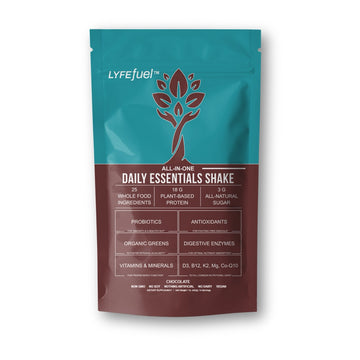
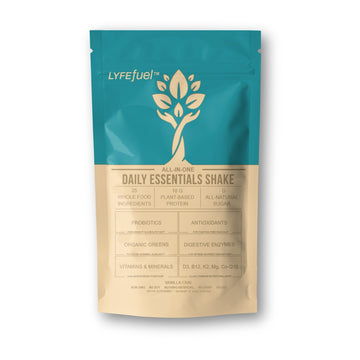
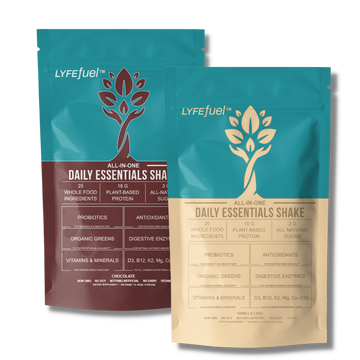
LyfeFuel Essentials is built for people who want to know exactly what is in the scoop and buy it without a middleman. If you want a plant-based, whole-food-first formula with low added sugar and an itemized label, it is a straight swap.
It suits you if you are:
- Following a plant-based or flexitarian diet
- Keeping added sugar low
- Replacing a meal and want protein without a 400-calorie load
- Tired of proprietary blends that hide amounts
- Done with buying supplements through a coach network
It is not the right pick if fiber is your priority. At 1g per serving we are low in this category, and Shakeology's 7g or Huel's 11g will serve you better on that one metric. If that is the thing you are optimizing for, buy theirs.
Conclusion
Shakeology earned its place in the category. It is also sold through an MLM, groups much of its formula into proprietary blends, and carries 5g of added sugar per serving. Those are the three reasons people go looking.
LyfeFuel Essentials answers all three: 18g of plant protein and a 27-nutrient panel in 110 calories, 3g of added sugar, every ingredient named with its amount, sold direct. Shakeology still beats us on fiber and servings per bag, and we would rather say so than pretend otherwise.
If that trade works for you, LyfeFuel Essentials is worth a try. You can also browse our full meal replacement shakes and recovery shakes.
FAQs
Who are Shakeology's main competitors?
In the meal replacement lane, Shakeology's main competitors are LyfeFuel Essentials, Ka'Chava, Huel and Orgain, with Herbalife and 310 Shake competing on the MLM side. On protein per serving the order runs Huel Black at 40g, Ka'Chava at 25g, LyfeFuel at 18g, then Shakeology at 16g. Shakeology leads its closest competitors on fiber at 7g.
Is there a Shakeology equivalent that is not sold through an MLM?
Yes. LyfeFuel, Ka'Chava and Huel are all sold direct to consumer, so there is no coach network and no recruitment structure. Of the three, LyfeFuel Essentials is the closest equivalent to Shakeology on format and calories, at 110 calories against Shakeology's 140 with a comparable vitamin and mineral panel.
What is the closest substitute for Shakeology?
LyfeFuel Essentials, if you want the same job done in the same way: a once-daily powder that replaces a meal and carries a full micronutrient panel rather than protein alone. Huel Black is the closest substitute if you want substantially more protein and fiber and are happy with a 400-calorie meal.
Is there a Shakeology dupe?
No formula is an exact copy, because Shakeology's blends are proprietary and the individual amounts are not published, so nobody can match it row for row. What you can match is the job it does. LyfeFuel Essentials covers the same ground with an itemized label, so you can see precisely what you are getting instead of a blend name.
What shake is comparable to Shakeology?
Ka'Chava is the most comparable on positioning and marketing, both sold as superfood meal shakes. LyfeFuel Essentials is the most comparable on actual nutrition, sitting closest to Shakeology on calories and protein. Huel and Grüns are further away: Huel is a much bigger meal, and Grüns is a gummy with no protein at all.
Is anything actually better than Shakeology?
It depends what you want fixed. On added sugar, calorie efficiency and label transparency, most direct-to-consumer alternatives including LyfeFuel come out ahead. On fiber and servings per container, Shakeology holds up well against this set. If your objection was the MLM model or the proprietary blends, then yes, buying direct with an itemized label is better. If you are happy with both, Shakeology is a reasonable product.
Is Shakeology worth it?
If you value the coaching and program structure it comes bundled with, and the fiber content suits you, it does what it says. The formula delivers 16g of protein, 7g of fiber and a broad micronutrient panel in 140 calories. The two things to weigh are the proprietary blends, which make the formula hard to compare against anything else, and the 5g of added sugar per serving.
What is cleaner: Shakeology or LyfeFuel?
On label transparency, LyfeFuel. Every ingredient is listed individually with its amount, whereas Shakeology groups much of its formula into proprietary blends. On added sugar, LyfeFuel is lower at 3g against 5g. Both are legitimate formulas; the difference is how much of it you can actually see.
Does LyfeFuel cover the same nutrients?
Broadly yes. LyfeFuel Essentials delivers 27 essential vitamins and minerals in forms your body recognizes and absorbs, plus adaptogens, greens, superfoods, digestive enzymes and prebiotics, in 110 calories. The one place it does not match Shakeology is fiber, where we provide 1g against their 7g.
Which is better for gut health?
Shakeology has the advantage on fiber at 7g per serving against our 1g, and fiber matters for digestive health. LyfeFuel includes digestive enzymes and prebiotics, but if you are choosing a shake specifically to raise fiber intake, Shakeology or Huel is the better pick. We would rather point you there than oversell our own panel.
Compare More Meal Replacement Shakes
See how LyfeFuel stacks up against other popular brands:
- Best Ka'Chava Alternative
- Best Huel Alternative
- AG1 Is a Greens Powder. LyfeFuel Is Complete Meal Nutrition
- 310 Nutrition vs. LyfeFuel
- LyfeFuel vs Athletic Greens
- LyfeFuel vs DadFuel
- LyfeFuel vs Rootana
How LyfeFuel Compares to AG1, Grüns and IM8
Greens powders and daily foundational formulas have taken over the category. They cover vitamins and minerals reasonably well. What almost none of them give you is protein, which is the nutrient that decides whether a scoop is a supplement or an actual meal.
| Per serving | LyfeFuel Essentials | AG1 | Grüns | IM8 Daily Ultimate Essentials |
|---|---|---|---|---|
| Protein | 18g (pea + organic rice) | 2g | 0g (gummies) | Not a protein source |
| Format | Meal you can build a day around | Greens powder | Gummies | Single-serve sachet |
| Vitamins & minerals | 27 essential nutrients | Vitamin and mineral blend | Vitamin and mineral blend | Broad nutrient blend |
| Calories | 110 | 40 | 50 | ~45 |
The practical difference: you can drink AG1, take Grüns and mix an IM8 sachet and still need to go find breakfast. One scoop of LyfeFuel Essentials covers similar micronutrient ground and brings 18 grams of plant protein with it, so it works as a meal instead of an addition to one.
Nutrition figures reflect each brand's published supplement facts panels as of September 2026. Formulas and prices change, so check the current label before you buy.