Metabolic Confusion: Weight Loss Miracle Or Myth?
Tejesh ReddyWhen it comes to losing weight, working out is only half the battle. It’s often not enough to just exercise regularly — you need to be mindful about what (and when) you eat.
There’s not a singular diet plan that works best for everybody, or ‘every body’.
But a calorie deficit is a calorie deficit no matter how you do it. (Though there are some really bad ways to do it. Like the Twinkie diet.)
One of the most popular “diets” or concepts on everyone’s mind these days is metabolic confusion.
So, what exactly is a metabolic confusion diet? Does metabolic confusion work? And most importantly, is following a metabolic confusion diet safe?
What Is Metabolic Confusion?
Metabolic confusion — also known as a calorie shifting diet — is the practice of alternating your calorie intake between higher and lower amounts. The goal is to trick your metabolism into staying high, burning more calories.
A major part of weight loss is all about energy balance. So you gotta have a calorie deficit. But as you lose more and more weight, your resting metabolic rate (RMR) keeps going lower and lower.
And that’s because your body is trying to maintain a specific set point, even when different stimuli are introduced to affect change.
As you consume less calories, or burn more than you consume, the body will begin to self-regulate by slowing down your metabolism to preserve itself. This can actually cause the body to hold onto stubborn body fat because fat provides more energy utility than carbs or protein… there are 9 calories per gram of fat vs. just 4 calories per gram of protein and carbohydrates.
As a result, you end up with a weight loss plateau.
Metabolic confusion is supposed to counter this plateau by shifting between high-calorie and low calorie periods of eating, essentially confusing your body so that it doesn’t think that you’re starving it, which would trigger the fat storage mechanism. This will help you maintain your RMR. Effectively, avoiding the typical drop in RMR seen in other low-calorie diets.
Does Metabolic Confusion Work?
Maybe.
If it does work, the scientific evidence is slim; just one study. Most of the information we have is anecdotal which — despite what a lot of people say — has some weight.
The study, published in the Journal of International Preventative Medicine, found that when compared to traditional calorie restriction (1,100 calories per day) calorie shifting (11 days of 1,100 calories, and 3 days unrestricted) was associated with more weight loss, less hunger, and greater diet adherence over 42 days.
What’s more, participants who shifted their calorie intake were able to maintain their pre-diet RMR, while calorie restriction led to a significant decrease in RMR.
However, another study — which followed participants for one year — found no difference between calorie shifting and calorie restriction on weight loss.
There is more evidence that metabolic confusion works, but it suggests that the secret isn’t tied to metabolism. According to a review published in Obesity Review, since calorie shifting allows greater flexibility, breaks, and satisfaction it might be more sustainable than calorie restriction long term.
If you struggle with sticking to caloric restriction, metabolic confusion might be the choice for you. It allows you to take breaks from low-calorie eating while maintaining a slight caloric deficit long term. But don’t forget, we don’t know the long-term effects on health.
How To Use Metabolic Confusion To Lose Weight
Calorie Cycling
One approach to metabolic confusion is simply varying your calorie intake by splitting your week into high and low-calorie days.
Unlike carb cycling (which we will touch on next) – these calories can come from any macro (protein, carbs, or fats.)
However, we don’t suggest you take calories away from your protein macros. It’s best to set your protein intake and leave it alone and only adjust your calories from fat and carbs. How would you go about this?
For instance, let’s say your daily calorie value to lose weight is 1500 calories per day. This is just an example. You would need to use your own personal calories.
1500 calories per day = 10,500 calories per week.
When you are on a “normal” diet, you would eat 1500 calories every day, and by the end of the week, you would have consumed 10,500 calories.
With calorie cycling, you would still get in 10,500 calories for the week, but you wouldn’t eat 1500 calories every day. Some days you might eat 1200 calories, and some days you might eat 2000.
This can be achieved in many different ways. The most popular method is to have two back-to-back high-calorie days followed by 5 days at the low-calorie number.
Example:
Monday-Friday: 1350 calories each day.
Saturday & Sunday: 1875 calories each day.
Total calories: 10,500
Sunday, Monday, Tuesday: 1200 calories each day.
Wednesday & Thursday: 1350 calories each day.
Friday & Saturday: 2100 calories each day.
Total calories: 10,500
The combinations for calorie intake are limitless as long as you stay within your target weekly calorie range. It is also not suggested that you do more than two high days in a row.
Carb Cycling
Instead of calorie cycling, some dieters opt to cycle carb intake. You keep your protein and fat intake the same 7 days a week, and your carb intake is the only thing that changes.
This is the preferred method of metabolic conditioning for two reasons:
1. There is solid research backing this strategy to be optimal for leptin – the hormone in your body that affects your metabolic rate.
2. It’s easier to follow, especially when cycling your carbohydrate intake to align with your activity levels.
The theory behind carb cycling is that the extra calories from carbs on high carb days will temporarily boost leptin levels – leading to a boost in metabolism, more satiety when you go back to a low carb day, and increased fat burn.
For this metabolic confusion strategy, you would eat low to moderate carbs some days and high carbs on other days. For example, on intense training days you may choose to increase your carb intake which you will naturally burn off due to the increased energy expenditure and maybe forgo carbs altogether or reduce them significantly on rest days or moderated training sessions.
An example of a typical carb cycling eating plan is one day of moderate carb intake, followed by four days of low carb intake, followed by one day of high carb intake.
Example:
If you typically eat 200 carbs every day, by the end of the week, you would have consumed 1400 carbs.On a carb cycling plan, you may do this instead:
Sunday: 250 carbs (moderate carb day)
Monday – Thursday: 100 carbs (low carb days)
Friday & Saturday: 375 carbs (high carb days)
Monday-Wednesday: 100 carbs (low carb days)
Thursday: 250 carbs (moderate carb day)
Friday: 100 carbs (low carb days)
Saturday & Sunday: 375 carbs (high carb days)
Using either example above, your total carb count for the week would still equal 1400 by the end of the week. Just like with calorie cycling, the number of carbs consumed and cycle length varies by person.
But in general, most days should be low carb days, and it is best if you don’t have more than two consecutive high carb days. If you have a high carb day, the next day should be a low carb day, or at the least, a moderate carb day.
Extreme Metabolic Confusion: Velocity Diet
A lot of people have heard of the Velocity Diet made popular by the bodybuilding website, T-Nation.
If you haven’t heard about the velocity diet, don’t worry… I’ll fill you in right now.
“The Velocity Diet is a 28-day state-of-the-art strategy that uses daily protein pulses to stimulate protein synthesis and boost protein uptake, utilization, and metabolic rate. The goal is to lose body fat while building muscle at the fastest, healthiest rate.”
It’s the simplest diet plan you can follow.
One meal a day (OMAD) with 4 protein shakes spread throughout the day.
That’s it.
Your goal is to get 1500-1600 calories and 200+ grams of protein. To achieve this, you take 2 scoops of protein powder per shake. So, that’s 50 grams of protein per shake more or less. And around 200 grams of protein from 4 shakes. Plus whatever you get from your one meal.
So, 1000 calories from protein shakes and 500-600 from your one meal.
You’re probably thinking that this just looks like an extreme calorie deficit high protein diet plan.
And you’re right.
Because the missing piece of the metabolic confusion aspect isn’t found in the Velocity Diet. In fact you need a modification to the 28 day Velocity Diet.
Here’s the modification:
Every 10th day is a high calorie, high carb day with no protein shakes.
So, this day would be 2500-3000 calories with 250-300 grams of carbs with low fat and protein.
The goal is to… you know… confuse your metabolism which by this time (i.e. 10 days in) would have gotten somewhat used to the Velocity Diet.
But this is the most extreme version of the Velocity Diet — which is why I can’t recommend it to you.
The biggest problem to such an extreme diet is adherence. There’s a very low chance that you’ll stick to this diet for 28 days straight (30 days with the modification). And you’d likely need to stick to it for much longer to see any significant results.
Plus even if you do stick with it till the end, there is a high chance that you’ll rebound and regain your lost weight when you go back to eating normally — because you haven’t actually addressed the root cause or changed your behavior. Behavior modification along with the quality of calories consumed is proven to be the most effective way to achieve long-term sustainable weight loss.
It’s a really clever way for T-Nation to sell heaps of protein powder supplements, but it’s certainly not the most effective plan for long term weight loss.
If you haven’t built up long term eating habits during the Velocity Diet, there’s a near 100% chance you'll gain the weight back. If the goal is to simply confuse your metabolism, don't worry, it'll definitely be confused. But it'll cause yo-yo diet effect and not the long term, life changing results that you’re after.
Conclusion
While you can’t really “trick” your metabolism, incorporating a metabolic confusion eating style may help prevent your metabolism from slowing down.
It is still a diet where you are restricting calories, but most people like calorie/carb shifting because it allows for more flexibility and mimics a more “normal” eating style of eating on some days.
The biggest perceived benefit of metabolic confusion is it can give a mental break from the daily grind of dieting without using “cheat meals” or “cheat days,” which can create a negative relationship with food.
If this seems too complicated, or you think it's headache to vary your calories or carbs day-to-day, you're not alone. There are more effective ways to lose weight and keep it off that don’t include radical changes to how you eat or the chore of weighing and measuring all your meals.
It’s called intuitive eating that is rooted in...
Real food nutrition.
The biggest challenge with most diets is that they focus too much on the quantity (i.e. counting calories and macros) and overlook quality (i.e. nutrient density & food quality) which is far more important for long-term success.
The other thing to keep in mind is that your weight is affected by so many factors beyond just diet and exercise alone. Irregular sleep cycles, chronic stress, hormonal imbalances, relationships, and a whole host of other factors play a role in how we look, feel, and perform and will determine how and where our body holds onto or releases the weight we aim to lose.
While short-term dietary trends like Metabolic Confusion may offer quick fixes, they often lack the sustainability needed for long-term success. Our Lyfe Transformation program goes beyond fleeting solutions, providing a holistic approach that nurtures your body, mind, and soul. With personalized guidance, balanced nutrition, and lifestyle support, we empower you to cultivate lasting well-being.
Make a commitment to your transformation – choose a path that's not just for today, but for a healthier and happier future. Join Lyfe Transformation and embark on a journey to a more vibrant, sustainable you.
Related Articles
Frequently Asked Questions
Is the Metabolic Confusion Diet Plan Safe?
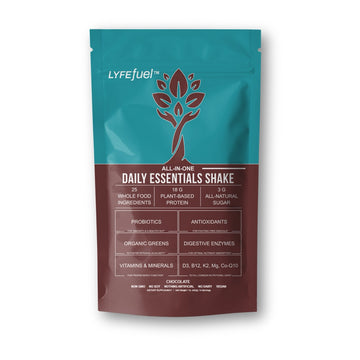
While metabolic confusion is generally considered safe for most people, there is limited long-term research on its health effects. It is always best to focus on nutrient-dense, whole-food nutrition, such as the LyfeFuel Essentials Shake, to ensure your body gets the essential vitamins and minerals it needs regardless of your calorie cycling strategy.
How Can I Increase My Metabolism?
To support a healthy metabolism, focus on maintaining consistent protein intake and avoiding extreme calorie restriction, which can cause your resting metabolic rate to drop. Incorporating nutrient-dense, whole-food supplements like LyfeFuel’s Essentials Shake can help you meet your nutritional needs while you manage your energy balance.
Are There Benefits To Metabolic Confusion?
Metabolic confusion may help prevent weight loss plateaus by keeping your resting metabolic rate stable, rather than allowing it to drop as it often does with traditional calorie restriction. Additionally, the flexibility of this approach can make it more sustainable and easier to adhere to long-term compared to rigid, low-calorie diets.
Are There Any Drawbacks To Metabolic Confusion?
The primary drawback is that scientific evidence supporting metabolic confusion is limited, with some studies showing no significant difference in weight loss compared to standard calorie restriction. Furthermore, because it involves complex calorie or carb cycling, it may be more difficult to track and maintain for some individuals compared to a simpler, consistent nutritional plan.