Whole Food Vitamins vs Synthetic Vitamins: What Your Body Actually Absorbs
LyfeFuel TeamMost supplements are not what they claim to be.
Walk into any vitamin aisle and you will find hundreds of bottles promising better health. Their labels display reassuring images of fruits, vegetables, and nature. But flip those bottles around and the reality is different. More than 90% of vitamin supplements sold today contain nutrients manufactured in industrial facilities, often derived from petrochemicals, coal tar derivatives, or chemically processed corn syrup.
Your body knows the difference.
When you eat an orange, you absorb vitamin C alongside bioflavonoids, fiber, and dozens of phytonutrients that work together. When you swallow a tablet of ascorbic acid, you get one isolated chemical. The research shows these are not equivalent experiences for your cells, your gut, or your long-term health.
This guide breaks down exactly what separates whole food vitamins from synthetic ones, what the science says about absorption, and how to read a supplement label so you can stop guessing.
What Are Synthetic Vitamins?
Synthetic vitamins are nutrients manufactured through industrial chemical processes. Despite being marketed as identical to the vitamins found in food, they differ in important ways.
How most synthetic vitamins are made:
- Vitamin C (ascorbic acid): Produced through the Reichstein process, which converts corn-derived glucose through multiple chemical steps using acetone and hydrochloric acid
- Vitamin B12 (cyanocobalamin): Synthesized through bacterial fermentation, then bonded with a cyanide molecule for stability. Your body must strip the cyanide group before converting it to the active methylcobalamin or adenosylcobalamin forms
- Vitamin E (dl-alpha-tocopherol): Derived from petroleum. The "dl" prefix indicates a 50/50 mixture of the natural d-form and the synthetic l-form. Your body preferentially uses the d-form and must process out the l-form
- Folic acid: A synthetic form of folate that does not exist in nature. Roughly 40% of the population carries an MTHFR gene variation that reduces their ability to convert folic acid into the usable form, 5-MTHF (methylfolate)
- Vitamin D2 (ergocalciferol): Produced by irradiating fungal matter. Less effective at raising blood vitamin D levels than the D3 form your skin produces from sunlight
- Vitamin A (retinyl palmitate): Synthesized from methanol and industrial chemicals. In high doses, synthetic vitamin A has been associated with toxicity concerns that food-sourced vitamin A (from beta-carotene) does not carry
The supplement industry uses synthetic forms for one reason: they cost a fraction of what whole food sourcing does. Synthetic ascorbic acid costs roughly $5-8 per kilogram. Whole food vitamin C from organic acerola cherry costs 20 to 50 times more.
How to Spot Synthetic Vitamins on a Label
If a supplement label lists vitamins by their chemical names without a food source, they are almost certainly synthetic:
| What the label says | What it means | Whole food alternative |
|---|---|---|
| Ascorbic acid | Synthetic vitamin C | Acerola cherry, camu camu, amla berry |
| Cyanocobalamin | Synthetic B12 with cyanide molecule | Methylcobalamin from bacterial culture |
| Folic acid | Synthetic folate | 5-MTHF (methylfolate) or food-derived folate |
| dl-alpha-tocopherol | Synthetic vitamin E (petroleum-derived) | d-alpha-tocopherol with mixed tocopherols from seeds |
| Ergocalciferol (D2) | Synthetic-adjacent vitamin D from sheep’s wool | |
| Calcium carbonate | Mined limestone rock | Plant calcium from algae (Lithothamnion) |
| Magnesium oxide | Industrial compound, ~4% absorption | Magnesium from marine vegetables or chelated forms |
| Retinyl palmitate | Synthetic vitamin A | Beta-carotene from carrots, sweet potato, spirulina |
The quick test: If you see a Supplement Facts panel that lists "Vitamin C" next to a dosage but no food source in parentheses, it is synthetic. Whole food supplements will typically list the source: "Vitamin C (from organic amla berry)" or similar.
What Are Whole Food Vitamins?
Whole food vitamins are nutrients delivered inside or alongside the food matrix they naturally occur in. Rather than isolating a single chemical compound, whole food supplements concentrate real foods while preserving the naturally occurring cofactors that accompany each nutrient.
This distinction matters because nutrients do not work alone.
The food matrix effect: When you eat a serving of kale, you absorb vitamin K alongside chlorophyll, fiber, sulforaphane, and dozens of other compounds. These cofactors affect how your body transports, absorbs, and utilizes that vitamin K. Isolate the vitamin K as a synthetic compound and you lose the delivery system evolution built around it.
What a whole food supplement looks like in practice:
- Vitamins sourced from concentrated organic fruits, vegetables, and herbs
- Minerals bound to food matrices or plant-based sources (like calcium from algae instead of limestone)
- Naturally occurring enzymes, antioxidants, and phytonutrients retained in the final product
- Gentle processing that preserves nutrient integrity (low-temperature drying rather than high-heat chemical extraction)
Not all supplements calling themselves "whole food" meet this standard. Some brands add trace amounts of food powder to synthetic vitamin bases and market the product as food-based. Check the Supplement Facts panel: every vitamin and mineral should list its food source.
The Science: Do Whole Food Vitamins Absorb Better?
The absorption question is the most contested topic in nutrition science. The answer is nuanced and depends on the specific nutrient.
Where the evidence is strong
Folate vs. folic acid: This is the clearest case. A 2022 meta-analysis published in the European Journal of Clinical Nutrition confirmed that 5-MTHF (the food form of folate) achieves higher plasma folate levels than synthetic folic acid. For the approximately 40% of people with MTHFR polymorphisms, folic acid is particularly problematic because their bodies struggle to convert it to the usable form. Unmetabolized folic acid in the bloodstream has been linked to immune function concerns in preliminary research.
Vitamin E: A landmark study in the American Journal of Clinical Nutrition demonstrated that natural d-alpha-tocopherol has roughly twice the bioavailability of synthetic dl-alpha-tocopherol. The body's alpha-tocopherol transfer protein preferentially binds the natural form. The synthetic version contains stereoisomers the human body did not evolve to use efficiently.
Vitamin B12: Methylcobalamin and adenosylcobalamin (the forms found in food) are the biologically active forms your nervous system and cells use directly. Cyanocobalamin requires your body to strip a cyanide molecule and then convert it, adding metabolic steps and reducing effective delivery.
Mineral absorption: Plant-based calcium sources (like the marine algae Lithothamnion) have shown superior absorption rates compared to calcium carbonate (limestone) in comparative studies. The porous, honeycomb structure of algae-derived calcium provides a larger surface area for absorption, plus naturally occurring trace minerals like magnesium, boron, and strontium that support calcium utilization.
Where the science is more nuanced
Vitamin C: Synthetic ascorbic acid and the ascorbic acid in food are chemically identical molecules. Several human studies, including research from the Linus Pauling Institute, show similar short-term plasma levels from both sources. However, the vitamin C in whole foods comes packaged with bioflavonoids (like quercetin and rutin) that appear to enhance its antioxidant function and cellular retention. The isolated compound may enter your bloodstream at similar rates, but the functional impact in your tissues may differ.
B vitamins (general): Individual synthetic B vitamins absorb adequately in isolation. The argument for food-sourced B vitamins rests more on the cofactor advantage: B vitamins in food come with the enzymes, coenzymes, and binding proteins that facilitate their metabolic roles. A B-complex from nutritional yeast or sprouted grains delivers these cofactors naturally.
The bigger picture: what absorption studies miss
Most bioavailability studies measure blood plasma levels 2-4 hours after ingestion. This captures absorption but not utilization. A nutrient that enters your bloodstream is not the same as a nutrient your cells actually use.
This is where Dr. Bruce Ames' Triage Theory becomes relevant.
Triage Theory: Why Nutrient Quality Matters for Long-Term Health
In 2006, Dr. Bruce Ames, a biochemist at the University of California, Berkeley, published his Triage Theory of micronutrient shortages. The theory proposes that when your body has insufficient micronutrients, it rations them.
The rationing hierarchy:
- Short-term survival proteins get nutrients first (blood clotting, immune response, acute cellular repair)
- Long-term health proteins lose out (DNA repair, cardiovascular maintenance, cancer prevention, neurological protection)
In practical terms: if your vitamin K intake is marginal, your body will prioritize using it for blood clotting (survival) at the expense of arterial calcification prevention (longevity). You will not notice the deficit today. You may notice it in 20 years.
Why this matters for synthetic vs whole food vitamins:
If synthetic vitamins deliver lower effective nutrition to your cells (through reduced utilization, missing cofactors, or metabolic conversion losses), then the long-term impact compounds. It is not just about whether ascorbic acid hits your bloodstream. It is about whether your cells receive enough usable micronutrients to fund both survival and longevity functions.
Ames' research suggests that micronutrient inadequacies, even those that do not produce clinical deficiency symptoms, may accelerate aging and increase chronic disease risk over decades. The quality and form of your nutrients determines whether your body can fully fund both columns of the triage equation.
This is the argument whole food vitamin advocates miss when they focus only on absorption percentages. The real question is: over 10, 20, 30 years of daily supplementation, does the form of your vitamins affect how well your body maintains long-term health?
The evidence increasingly suggests it does.
The Cofactor Advantage: Why Isolated Nutrients Fall Short
A vitamin is not a single molecule. In food, every vitamin exists within a complex of supporting compounds. Nutritional science calls these cofactors.
Examples of cofactor synergy:
- Vitamin C + bioflavonoids: Quercetin, rutin, and hesperidin enhance vitamin C's antioxidant activity and improve its stability in tissue. An orange delivers all of these together. A tablet of ascorbic acid delivers none of them.
- Vitamin D + vitamin K2 + magnesium: These three nutrients work as a team for calcium metabolism. Vitamin D increases calcium absorption, vitamin K2 directs calcium into bones (not arteries), and magnesium activates the enzymes that make D functional. Taking vitamin D alone without K2 and magnesium is incomplete.
- Iron + vitamin C + copper: Vitamin C dramatically increases non-heme iron absorption. Copper is needed for iron transport in the blood. Spinach delivers all three. An iron pill delivers one.
- B vitamins + folate + choline: These nutrients participate in the methylation cycle together. Deficiency in any one of them bottlenecks the entire pathway. Food sources like liver, eggs, and leafy greens deliver them as a functional unit.
- Calcium + magnesium + boron + strontium + trace minerals: Bone health requires a mineral matrix, not a single compound. Algae-derived calcium naturally contains over 70 trace minerals. Calcium carbonate from limestone contains one.
Synthetic supplements attempt to replicate these synergies by combining individual compounds in a capsule. But a manufactured blend of isolated chemicals is not the same as a food matrix where these compounds grew together and exist in ratios shaped by millions of years of plant evolution.
Questionable Additives Hiding in Most Supplements
Beyond the synthetic vitamins themselves, most conventional supplements contain additional ingredients that provide no nutritional value:
- Titanium dioxide: Used as a whitening agent. The European Food Safety Authority reclassified it as "no longer considered safe" as a food additive in 2021.
- Magnesium stearate: A flow agent used in manufacturing to prevent ingredients from sticking to machinery. Derived from hydrogenated fats.
- Silicon dioxide: An anti-caking agent. While generally recognized as safe, it serves no nutritional purpose.
- Artificial colors (FD&C dyes): Used to make supplements visually appealing. These petroleum-derived dyes have been linked to behavioral concerns in children in some studies.
- Talc: Used as a filler. Has faced scrutiny due to potential contamination with asbestos in some mineral sources.
- Carrageenan: Used in liquid supplements and soft gels as a thickener. Some research has linked degraded carrageenan to gastrointestinal inflammation.
A whole food supplement formulated with integrity should not need any of these. When your ingredient list is concentrated food, the food itself provides the structure, color, and stability the product needs.
How to Choose a Whole Food Vitamin: 5 Things to Check
1. Read the Supplement Facts panel, not the front label. Every vitamin and mineral should list its food source. "Vitamin C (from organic amla berry)" is transparent. "Vitamin C (as ascorbic acid)" is synthetic.
2. Look for third-party testing. Reputable whole food supplement brands invest in independent testing for purity, potency, and contaminants (heavy metals, pesticides, microbials). Look for certifications like NSF, USP, or independent lab verification.
3. Check for organic certification. If a brand claims whole food sourcing, the ingredients should be certifiably organic. Non-organic produce used in supplements may carry pesticide residues that defeat the purpose of choosing a cleaner product.
4. Evaluate the full formula, not individual ingredients. A good whole food supplement is not a list of 50+ ingredients at pixie-dust doses. It should provide meaningful amounts of each nutrient from identifiable food sources. More ingredients is not better if the doses are insignificant.
5. Beware "food-based" marketing tricks. Some brands add small amounts of fruit or vegetable powder to a synthetic vitamin base and market the product as "food-based" or "made with real food." This is technically true but misleading. In a genuine whole food supplement, the food IS the source of the vitamins, not a decorative addition.
Common Questions About Whole Food vs Synthetic Vitamins
Are synthetic vitamins safe? Most synthetic vitamins are generally recognized as safe at recommended doses. The concern is not acute toxicity but rather long-term efficacy. If your body processes synthetic forms less efficiently, you may be getting less functional nutrition than the label suggests, even if no immediate harm occurs. The exception is synthetic folic acid for individuals with MTHFR variations, where unmetabolized folic acid may accumulate.
Are whole food vitamins more expensive? Yes. Whole food sourcing costs significantly more than synthetic manufacturing. Organic whole food ingredients can cost 10 to 50 times more per unit of vitamin than their synthetic equivalents. This is why over 90% of the supplement industry uses synthetic forms. The question is whether the higher cost delivers meaningfully better nutrition. For nutrients like folate, vitamin E, and B12, the evidence suggests it does.
Can I just eat well and skip supplements entirely? In theory, yes. In practice, modern agriculture, soil depletion, food processing, and lifestyle factors make it difficult for most people to consistently meet all micronutrient needs through diet alone. A 2021 study in the Journal of Nutrition found that 31% of the US population is at risk of at least one vitamin deficiency. A whole food supplement is designed to fill those gaps using the same nutrient forms your body evolved to process.
Do whole food vitamins contain lower doses? Sometimes. Because whole food ingredients are less concentrated than synthetic compounds, some whole food supplements provide lower absolute doses (measured in milligrams). However, if the bioavailability is higher, the effective dose, what your cells actually receive, may be equal or greater. A 200mg dose of whole food vitamin C with intact bioflavonoids may deliver more functional antioxidant activity than 1,000mg of isolated ascorbic acid.
What about vitamins like D3 that are hard to get from food? Not all nutrients can be practically sourced from whole foods at supplemental doses. Vitamin D3 is a good example: the best whole food sources (fatty fish, egg yolks) contain modest amounts, and most D3 supplements use either lanolin (from sheep's wool) or lichen. Neither is technically a "whole food," but lichen-derived D3 is the plant-based option. A well-designed supplement will use the most bioavailable, cleanest source for each nutrient, even when a whole food source is not practical for every single compound.
How do I know if my current supplement uses synthetic vitamins? Check the Supplement Facts panel. If vitamins are listed by chemical name (ascorbic acid, dl-alpha-tocopherol, cyanocobalamin, folic acid, ergocalciferol) without a food source, they are synthetic. If the label says something like "Vitamin C (from organic acerola cherry extract)," it is food-sourced. Most mainstream multivitamins, including popular brands sold at pharmacies and big-box stores, use predominantly synthetic forms.
Where LyfeFuel Stands
LyfeFuel formulates every product using exclusively organic whole food ingredient sources. We do not use synthetic vitamins in any product.
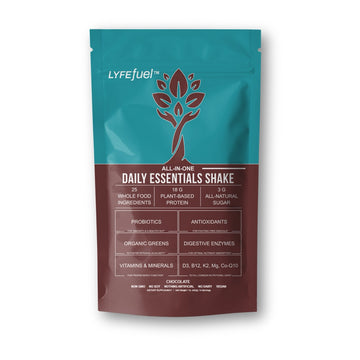
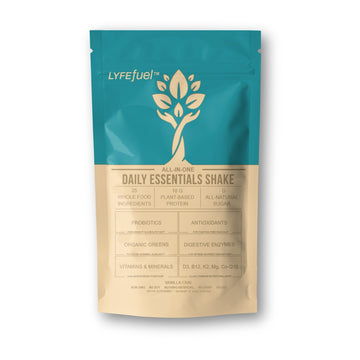
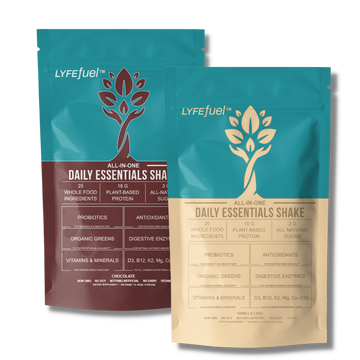
Every micronutrient in the Essentials Shake comes from real food: vitamin C from organic amla berry, B vitamins from organic guava leaf, calcium and minerals from organic marine algae, iron from organic curry leaf, and vitamin A from organic carrots and sweet potato. Twenty-seven vitamins and minerals, all from identifiable plants you could grow in your garden.
We chose this approach because the science, the evolutionary logic, and the precautionary principle all point in the same direction. When the form of a nutrient affects how your body uses it, and you are taking that nutrient every single day for years, the form matters.
It costs us significantly more to formulate this way. That is why we are not the cheapest option and never will be. But we believe the nutrition your body actually absorbs is more important than the number printed on a label.
Related Reading
- The Hidden Truth About Nutritional Supplements: How the supplement industry's manufacturing practices affect what you actually get
- Should You Take Dietary Supplements?: When supplementation makes sense and how to decide
- Macronutrients and Micronutrients: Why You Need Both: The complete picture of what your body needs daily
- Folic Acid vs Folate: What Matters During Pregnancy: Why the form of this critical nutrient is especially important
- Nutritional Deficiencies Guide: Signs you may be falling short and what to do about it
- Vitamin D Guide: The sunshine vitamin, its forms, and why sourcing matters
- Vitamin K2 Benefits: The overlooked nutrient in the D3/K2/calcium triad
Last reviewed: July 2026. LyfeFuel content is reviewed by our nutrition team for accuracy. This article is for educational purposes and does not constitute medical advice. Consult your healthcare provider before making changes to your supplement routine.