Meal Replacement Shakes
- SHOP ALL
- NUTRITION SHAKES
- NUTRITION BARS
- BUNDLES
SHOP BY CATEGORY:
-

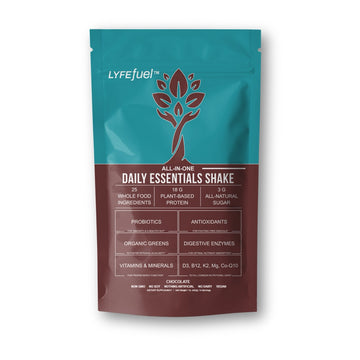
Essentials Nutrition Shake
Regular price $70.00Sale price $70.00 Regular priceEssentials Nutrition Shake
Regular price $70.00Sale price $70.00 Regular priceRegular price $70.00Sale price $70.00 Regular priceIndulge your chocolate cravings while fueling your energy and metabolism.

When evaluating meal replacement powders, understanding the difference between formulation philosophies matters far more than marketing claims. Most commercial protein shakes deliver basic macronutrient content without attention to nutrient bioavailability or form, the actual chemical structure that determines whether your body can use what you're consuming.
The real conversation isn't just about getting more protein or dialing in the perfect ratio of macronutrients. It's about filling the nutritional gaps that persist even among people who prioritize their health.
Meal replacement powders have evolved from simple protein supplementation to genuinely comprehensive nutrition. However, this evolution reveals a critical divide: between products that deliver nutrients your body can actually utilize and those that simply hit basic Daily Value percentages to check the box of “complete nutrition” on a label.
The distinction lies in two fundamentals: sourcing practices and micronutrient form selection. Food-grown alternatives derive their protein and micronutrients from actual plant foods rather than laboratory isolates, while also prioritizing bioavailable vitamin and mineral forms. Efficacy of these products will largely depend on the quality of the nutrients used. To the average consumer these nuances can be very subtle and often go unnoticed but it is this distinction that distinguishes comprehensive nutrition shakes versus protein shakes with some vitamins & minerals sprinkled in the mix.
This approach matters because modern diets consistently fall short in specific nutrients. Research from institutions like the Linus Pauling Institute documents widespread deficiency patterns for vitamin D, vitamin K, magnesium and B vitamins like folate and B12 in populations following otherwise healthy dietary patterns. More notably, anyone following a restrictive or specialized diet (i.e. vegan, keto, carnivore diet) or using GLP-1 medications are more prone to vitamin & mineral insufficiencies. Standard commercial meal replacements address these gaps with the most economical forms: D2 instead of D3, no K2 at all, and synthetic B12 analogs — choices that optimize cost, not absorption.
The Nutritional Gap in Modern Diets
Most people don't fully recognize why supplementation matters, even for those eating "healthy." A plant-based diet, increasingly popular for health and environmental reasons, covers most nutritional bases admirably. Yet specific nutrients present absorption challenges that whole foods alone cannot reliably address.
The Vitamin D Deficiency Pattern
Vitamin D deficiency affects an estimated 40-50% of the U.S. population, with even higher rates among those with limited sun exposure, darker skin tones, or those living in northern latitudes. Research demonstrates that natural food sources provide minimal vitamin D for most people, making supplementation either necessary or beneficial for the majority.
The problem compounds when we examine what gets supplemented. Most commercial products use vitamin D2 (ergocalciferol), derived from fungal sources or lanolin (oil from sheep’s wool). While less expensive, D2 proves substantially less effective at raising and maintaining blood vitamin D levels than D3 (cholecalciferol). Studies consistently show that D3 produces superior increases in serum 25(OH)D—the marker that determines functional vitamin D status. In fact, recent studies suggest that Vitamin D2 supplementation can actually have the opposite desired effect, depleting the body’s Vitamin D levels instead of boosting it.
For plant-based consumers, this matters acutely. While some fortified plant milks contain vitamin D, most use D2. Someone exclusively consuming plant-based sources may hit adequate D2 intake while still maintaining functionally insufficient D3 levels.
The Vitamin K Deficiency Pattern
Vitamin K plays a critical role in bone metabolism, cardiovascular health, and neurological function. Yet it remains absent from most commercial meal replacement powders, even premium ones.
The nutritional research is clear: healthy bones require more than calcium. Vitamins D and K work synergistically to activate the proteins that bind calcium to bone matrix. Without adequate K2 (the form your body requires for these calcium-binding proteins), calcium supplementation becomes nutritionally incomplete, and similar to the Vitamin D conundrum mentioned previously, can actually cause undesirable side effects. Without adequate amounts of Vitamin D3 + K2 supplemental calcium can build up in the system leading to ulcers, kidney stones, and other negative side effects.
Most people consume vitamin K1 (phylloquinone) from leafy greens adequately and get plenty of calcium through dietary forms without the need for supplementation. But K2 (menaquinone), the form your body requires for bone and vascular health, rarely appears in sufficient quantities in standard Western diets. Fermented foods, aged cheeses, and certain animal products contain K2 naturally, but plant-based sources remain limited. The Linus Pauling Institute research indicates that many health-conscious consumers unknowingly carry K2 intakes well below optimal levels.
The Vitamin B12 Challenge
B12 represents the most commonly discussed nutrient gap in plant-based diets. But the actual issue proves more nuanced than simple deficiency risk.
Soil bacteria produce vitamin B12 naturally. Historically, humans obtained dietary B12 from less sanitized vegetables and water. Modern agriculture and hygiene standards have essentially eliminated this incidental source. Everyone now needs supplemental B12 if they're not consuming animal products regularly — a universal need, not a plant-based-diet-specific problem.
Yet the form matters significantly. Cyanocobalamin, the synthetic form used in most fortified foods and supplements, requires conversion in your body before utilization. This conversion step depends on your body's ability to process B vitamins efficiently, a capacity influenced by genetic factors, particularly the MTHFR gene.
For the estimated 30-40% of people carrying MTHFR gene variants, this conversion process proves less efficient. These individuals may struggle to convert cyanocobalamin into its usable forms (methylcobalamin and adenosylcobalamin), potentially maintaining lower functional B12 status despite adequate supplementation.
Methylcobalamin, the active form found in some higher-quality formulations, bypasses this conversion requirement entirely. Your body can use it directly, regardless of MTHFR status. Studies comparing these forms show faster blood level increases and superior tissue accumulation with methylcobalamin, particularly pronounced in individuals with conversion inefficiency.
For people with MTHFR variants, this distinction moves from "potentially beneficial" to "practically necessary." A cyanocobalamin supplement may prove inadequate, while methylcobalamin provides the functional B12 status that conversion-dependent forms cannot reliably achieve.
Most commercial meal replacements use cyanocobalamin. Not because it's better, but because it's cheaper.
Why Standard Meal Replacement Powders Fall Short
Walk through any supplement section and you'll find rows of meal replacement powders promising "complete nutrition" with wildly inconsistent definitions of that term.
Incomplete Micronutrient Selection
The most obvious limitation: standard formulations provide fragmented micronutrition. They typically include 20-40% of Daily Values for various vitamins and minerals, distributed across 15-20 nutrients at best. This approach creates nutritional patchwork — adequate in some areas, deficient in others, with no strategic addressing of the gaps that actually exist in modern diets.
Truly comprehensive nutrition requires strategic supplementation of nutrients that are simultaneously:
-
Difficult to obtain from common food sources
-
In forms your body can efficiently utilize
-
Present in quantities sufficient to shift functional status
Most commercial meal replacements check none of these boxes.
The Micronutrient Form Problem
Beyond what nutrients are included, the chemical form determines how much your body actually absorbs. This is where the purchasing economy of the supplement industry reveals itself.
Vitamin D2 costs less than D3. Synthetic cyanocobalamin costs less than methylcobalamin. Inorganic mineral forms cost less than chelated or bioavailable alternatives. When a manufacturer can include "25 vitamins and minerals" at minimal cost, the temptation to prioritize inclusion over effectiveness becomes overwhelming.
The result: products that technically satisfy Daily Value requirements while delivering a fraction of the physiological benefit of higher-quality forms.
Missing Synergistic Compounds
Plant-based protein sources provide more than macronutrients. They deliver phytonutrients, polyphenols, and cofactors that your digestive system recognizes as food. Your body has evolved over millennia to process nutrients within their natural plant matrices, structures that enhance absorption and utilization.
Research on plant-based proteins confirms that properly formulated whole-food protein sources can match the muscle-building effects of whey when the formulation maintains these supporting compounds. The advantage isn't just philosophical, it's metabolic.
How LyfeFuel Addresses These Gaps
Rather than chasing ever-longer ingredient lists, LyfeFuel's approach targets the specific nutritional voids that persist in modern diets.
Strategic Micronutrient Selection
LyfeFuel includes nutrients chosen for evidence of deficiency patterns in populations following health-conscious diets. This means vitamin D, vitamin K, magnesium, B12, and other “at-risk” micronutrients receive priority. Not because they're trendy, but because research documents their scarcity.
More importantly, each nutrient is selected in the form your body actually utilizes:
-
Vitamin D3 (cholecalciferol) rather than D2, delivering the form that raises blood levels most effectively
-
Vitamin K2 (menaquinone) rather than relying entirely on K1, addressing the gap that calcium supplementation alone cannot fill
-
Methylcobalamin rather than simply cyanocobalamin, providing B12 in its active, immediately available form. Each serving of LyfeFuel delivers 500mcg of methylated B12 and only a trace amount of cyanocobalamin.
-
Bioavailable mineral forms that your digestive system recognizes and absorbs efficiently
This represents a fundamental difference in product philosophy. Instead of maximizing ingredient count at minimal cost, each inclusion serves a specific nutritional purpose rooted in research on modern dietary patterns.
Whole-Food Protein Sourcing
Plant-based protein research has matured substantially. Studies confirm that properly formulated plant-protein blends, combining complementary amino acid profiles, deliver muscle-building capacity equivalent to animal proteins when formulated correctly.
LyfeFuel's approach maintains the protein matrix from whole plant sources rather than isolating and processing protein into bare amino acids. This preservation of the supporting plant structure maintains the phytonutrients and cofactors that facilitate absorption and utilization.
Processing Method: Solvent-Free vs. Chemical Extraction
The industry standard for plant protein extraction relies on chemical solvents, typically hexane or other organic solvents, to isolate protein from plant material. This method maximizes protein yield at minimal cost, but the process strips away the very compounds that make plant-based nutrition distinct: the polyphenols, phytonutrients, and enzymatic cofactors that support absorption.
Solvent-extracted protein concentrates achieve high protein percentages by removing supporting compounds. The result is a more complete protein isolate but a less complete nutritional product.
LyfeFuel uses solvent-free mechanical processing, which maintains the plant's natural nutrient matrix while concentrating protein. This approach involves physical separation processes — mechanical pressing, gentle dehydration, and selective grinding — rather than chemical extraction. The trade-off is a lower protein percentage per unit weight, but a substantially higher nutritional density per serving because the supporting compounds remain intact.
Sprouted Rice Protein vs. Non-Sprouted Concentrate
Additionally, LyfeFuel uses sprouted rice protein rather than the more common non-sprouted concentrates. Sprouting initiates enzymatic activity that pre-digests complex carbohydrates and improves amino acid bioavailability. Sprouted grains demonstrate superior nutrient absorption compared to their non-sprouted counterparts because:
-
The sprouting process increases amino acid content and bioavailability
-
Anti-nutritive compounds (like phytic acid) are reduced, which would otherwise impede mineral absorption
-
The enzymatic environment that develops mirrors the natural state your digestive system recognizes
-
The pre-digestion that sprouting initiates reduces the metabolic work your body must perform
This matters practically: protein from sprouted sources undergoes better absorption and utilization by your body compared to non-sprouted protein at equivalent doses. Your digestive system spends less metabolic effort breaking down the protein and faces fewer anti-nutritive factors that might impede absorption.
Most commercial meal replacements use non-sprouted rice protein concentrate extracted with solvents—a process that maximizes efficiency and profit margin, not nutrition. The protein percentage looks equivalent on the label. The actual nutritional value (what your body can absorb and utilize) differs substantially between the two approaches.
Research on athletic performance demonstrates that plant-based proteins deliver these benefits without the inflammatory compounds and hormonal impacts associated with high dairy intake. This advantage amplifies when the plant protein processing preserves the phytonutrients that reduce inflammation in the first place, rather than stripping them away in pursuit of isolated protein concentration.
Transparent Sourcing and Processing
The Farm to Fuel approach means you can trace ingredients from their origin through processing. This transparency addresses a legitimate consumer concern: in an industry built on fortified ingredients, how do you know what you're actually getting?
Minimal processing preserves the nutritional integrity that sophisticated processing strips away. This matters because your digestive system responds differently to whole-food nutrients than to isolated compounds.
Understanding Nutrient Bioavailability
"Bioavailability" has become a marketing term, often deployed without precision. Let's clarify what it actually means.
Bioavailability describes how much of a nutrient you consume actually gets absorbed from your digestive tract into your bloodstream, where your body can use it. It depends on several factors:
-
Chemical form: Your body absorbs D3 more efficiently than D2
-
Supporting compounds: Nutrients in their natural food matrix absorb better than isolated forms
-
Digestive compatibility: Your gut recognizes whole-food nutrients and processes them accordingly
-
Cofactor presence: Many nutrients require specific supporting compounds for absorption
This is not mystical. It's biochemistry, documented in peer-reviewed research.
When comparing meal replacement options, this matters. A product claiming "25 grams of protein" tells you the quantity. It doesn't tell you whether that protein is in a form and matrix your body recognizes, or whether the supporting nutrients necessary for protein metabolism are actually present in usable form.
The Science Behind Plant-Based Protein
Plant-based protein has historically carried an unfounded reputation for inferiority. This reflects outdated understanding of amino acid requirements, not current research.
Modern research in sports nutrition confirms that plant-based proteins deliver equivalent muscle-building effects to animal proteins when:
-
The amino acid profile is complete (containing all essential amino acids in adequate ratios)
-
The formulation combines complementary plant proteins to achieve complete amino acid profiles
-
The serving size accommodates the slightly lower amino acid density of plant sources
-
The protein matrix maintains supporting compounds that facilitate metabolism
LyfeFuel's formulation addresses each of these criteria. Rather than isolating single-source plant proteins, the blend combines multiple plant sources to deliver a complete amino acid profile while preserving the phytonutrient content that makes plant-based nutrition distinct.
The advantage of plant-based sourcing extends beyond bioavailability. Plant proteins deliver the nutrients you're trying to supplement in the first place (vitamins, minerals, and phytonutrients) without the inflammatory compounds that high dairy intake introduces.
Research on athletes consuming plant-based nutrition shows equivalent performance metrics to dairy-based options with reduced inflammatory markers, meaningful for recovery and long-term health.
How to Choose a Meal Replacement Powder
Evaluating meal replacement options requires moving beyond marketing claims to actual nutritional design.
Evaluate the Micronutrient Forms
Ask yourself: Are the vitamins and minerals in forms my body can efficiently utilize? Look specifically for:
-
Vitamin D3 (not D2)
-
Vitamin K2 (not just K1)
-
Methylcobalamin or cyanocobalamin (with preference for methylcobalamin)
-
Chelated minerals where applicable (typically superior absorption)
-
Absence of synthetic additives that impede digestion
This single question eliminates most mass-market options, which optimize for cost rather than form effectiveness.
Assess Nutrient Selection Against Your Diet
Consider the specific gaps in your actual dietary pattern. Are you consuming adequate leafy greens (addressing K1 but not K2)? Are you in a northern climate with limited sun exposure (suggesting D3 supplementation would be valuable)? Do you consume animal products or fortified foods reliably (determining B12 need)?
Truly comprehensive nutrition means targeting the gaps that actually exist in your life, not providing a token 20% of every possible nutrient.
Examine Sourcing Transparency
Products that clearly communicate ingredient origins and processing methods demonstrate confidence in quality. Farm-to-product traceability isn't marketing theater, it's evidence that the manufacturer maintains standards throughout the supply chain.
Avoid products with vague ingredient descriptions, synthetic additives, or processing that strips away the very nutrients you're seeking.
Review the Actual Ingredient Quantity
Label transparency matters more than ingredient count. A product with 15 nutrients at meaningful doses proves nutritionally superior to a product with 30 nutrients at token amounts.
Look for products that provide sufficient quantities to shift your nutritional status, not just to check off Daily Value percentages.
Comparison: LyfeFuel vs. Standard Meal Replacement Approaches
Understanding how formulation philosophy differs reveals the actual distinctions that matter.
|
Factor |
LyfeFuel |
Typical Commercial Powders |
Budget Alternatives |
|
Vitamin D Form |
D3 (cholecalciferol) |
D2 (ergocalciferol) |
D2 or minimal inclusion |
|
Vitamin K |
K2 (menaquinone) included |
K1 only or absent |
Absent |
|
Vitamin B12 |
Methylcobalamin |
Cyanocobalamin |
Cyanocobalamin or minimal |
|
Micronutrient Depth |
Strategic, research-informed |
Broad but shallow coverage |
Minimal coverage |
|
Protein Sourcing |
Whole-food plant blend |
Isolated concentrates |
Isolated concentrates |
|
Cofactor Preservation |
Maintained through processing |
Stripped through isolation |
Minimal cofactors |
|
Transparent Sourcing |
Farm-to-Fuel traceability |
Limited visibility |
No visibility |
|
Processing Approach |
Minimal, preservation-focused |
High-temperature isolation |
High-temperature isolation |
The distinction becomes stark when examining actual nutritional design. Budget alternatives maximize nutrient count at minimal cost. Standard commercial products improve on this but still prioritize shelf-stability and cost over bioavailability. LyfeFuel prioritizes the form and quantity of nutrients that actually shift functional status.
Common Concerns and Misconceptions
Despite growing awareness of nutrient forms and bioavailability, misconceptions persist.
"Meal replacements can't substitute for real food"
This remains true. Whole foods provide compounds we haven't fully characterized, plus the social and psychological satisfaction of eating. Meal replacements serve as supplementation tools, not complete dietary replacements.
However, this doesn't mean they lack nutritional value. A comprehensively formulated meal replacement provides genuine nutrition that addresses documented deficiency patterns, something a poorly constructed one simply doesn't accomplish.
"All supplements are basically the same"
This reflects a fundamental misunderstanding of how nutrients work. The difference between D2 and D3 isn't semantic. It's biochemical. Studies show substantially different effects on functional vitamin D status, bone health, and immune function.
Similarly, cyanocobalamin and methylcobalamin differ in absorption rates and tissue utilization. These aren't minor variations, they determine whether supplementation effectively shifts your nutritional status.
"I can get everything I need from food"
For most nutrients, this is true. But for specific nutrients in specific situations, food alone becomes inadequate.
A person following a plant-based diet can reliably obtain most nutrients from varied whole foods. But vitamin D in northern latitudes? Vitamin K2 in substantial quantities? B12 without fortified foods? These require either targeted supplementation or acceptance of functional deficiency.
Research from the Linus Pauling Institute and other major nutritional research centers documents these gaps persistently across populations, regardless of dietary quality.
"Higher price means better quality"
Price correlates loosely with quality. Some premium products are genuinely superior, while others charge for branding. Price reflects:
-
Ingredient sourcing and processing costs
-
Supply chain transparency overhead
-
Formulation complexity
-
Brand positioning
A thoughtful evaluation examines the actual formulation rather than assuming price indicates quality.
Limitations and Realistic Expectations
Even the most comprehensively formulated meal replacement powder carries limitations worth acknowledging.
Cost and accessibility remain barriers. Food-grown, minimally processed formulations with strategic micronutrient forms cost more than budget alternatives. This reflects material reality — quality sourcing and processing demand more from a manufacturer.
Individual digestive variation matters. Some people adapt immediately to concentrated nutrition. Others experience temporary digestive adjustment as their system adapts to nutrient density. This typically resolves within days but shouldn't be dismissed.
Psychological and social factors shouldn't be overlooked. Eating involves pleasure, ritual, and social connection. Meal replacement powders can't replicate these aspects of food culture. They work best as strategic tools, replacing occasional meals to fill nutritional gaps, rather than complete dietary replacements.
Nutrient interactions are complex. While strategically designed products consider these factors, individual absorption varies based on digestive health, medication interactions, and other factors. Sophisticated supplementation benefits from professional guidance.
The most successful approach integrates meal replacement powders as enhancement tools within a varied whole-food diet, addressing specific nutritional gaps rather than replacing the foundation of whole foods that good health requires.
Frequently Asked Questions
Can a meal replacement powder effectively address documented nutrient gaps?
Yes, when formulated with strategic nutrient selection and bioavailable forms. Research on supplementation demonstrates that well-designed micronutrient supplementation shifts functional status (meaning measurable improvements in blood levels and physiological markers) for nutrients documented as deficient in target populations.
The key distinction: effectiveness depends on the nutrients included, the forms used, and the quantities provided. Token inclusion of nutrients in cheap forms accomplishes little. Strategic supplementation at meaningful doses shifts status measurably.
How do plant-based proteins compare to whey for muscle building?
Research in sports nutrition confirms that properly formulated plant-based proteins deliver equivalent muscle-building effects to whey when amino acid profiles are complete and serving sizes accommodate the slightly lower amino acid density of plant sources.
The advantage extends beyond protein: plant-based sources deliver the phytonutrients and phytochemicals that reduce inflammation compared to high dairy intake, potentially supporting better recovery.
How long until I notice effects from improved micronutrient status?
This varies substantially by nutrient and individual status. Some effects (like improved energy from B12 optimization) can appear within days if B12 status was severely deficient. Others (like bone remodeling from vitamin K) develop over months.
Blood testing provides objective assessment of whether supplementation is shifting your nutritional status — a useful approach if you're uncertain whether a particular product is working for you.
What about shelf life and nutrient stability?
Whole-food-based formulations may have shorter shelf lives than synthetic alternatives, which achieve stability through processing that actually reduces nutritional value. This represents a genuine trade-off: nutrition versus convenience of ultra-long shelf life.
Proper storage (cool, dry conditions) maintains potency for 12-24 months in most formulations.
Can I use meal replacements with existing medical conditions or medications?
Nutrient-nutrient and nutrient-drug interactions require professional assessment. Specific nutrients, notably vitamin K, interact with medications like warfarin. B12 absorption issues can complicate supplementation with certain medications.
Medical guidance matters when managing supplementation around existing conditions or medication regimens.
Key Takeaways
The evolution of meal replacement nutrition reveals a critical industry divide: between products designed around marketing appeal and those designed around actual nutritional function.
The real distinction isn't whether meal replacements "work." It's whether they're formulated with genuine understanding of:
-
Which nutrients present genuine deficiency risks in modern diets
-
Which chemical forms of those nutrients your body actually utilizes
-
Which processing approaches preserve nutrient bioavailability
-
Which sourcing practices maintain nutritional integrity
Truly comprehensive nutrition requires moving beyond nutrient count to nutrient form and function. A 30-nutrient product providing 20% of each at cheap, poorly absorbed forms delivers less nutritional value than a 12-nutrient product with strategic selection, bioavailable forms, and research-informed dosing.
LyfeFuel's approach reflects this evidence-based philosophy. Rather than maximizing ingredient lists, the formulation targets documented deficiency patterns with nutrients in forms your body can utilize. Rather than isolating proteins into bare amino acids, the approach maintains the whole-food matrix that facilitates metabolism.
This distinction matters most to people who approach nutrition analytically, those willing to look beyond marketing claims to actual scientific positioning. For those willing to look beyond marketing hype and dig into the details, formulation quality and scientific integrity represent genuine differentiators.
The future of nutrition increasingly points toward precision supplementation: strategically addressing documented gaps rather than pursuing token inclusion of everything possible. LyfeFuel's positioning reflects this evolution.